Monday, 4 July 2011

Bears - be wise

Bears do not USUALLY attack people, but it is unusual. Black bear attacks are extremely rare — since 2000, there have been two fatal incidents involving black bears in British Columbia.

One Muskoka resident had been feeding raccoons, and shot a small bear at the feeding station. Bear Wise tells us to put away all bird feeders in summer.
IN AN IMMEDIATE EMERGENCY in Ontario: contact your local police force or dial 911

TO REPORT BEAR PROBLEMS: contact the Bear Reporting Line at:
1-866-514-BEAR (2327) (TTY) 705 945-7641

  • Make garbage and composting inaccessible to wildlife: 

    • Use heavy garbage cans with locking lids
    • Fasten lids with bungee cords
    • Put garbage out the morning of pick-up, not overnight
  • Use motion-sensitive floodlights to startle and scare away wildlife
  • Keep pet doors locked at night
  • Do not leave pet food outside overnight
  • Keep BBQ grills clean and close BBQ lids after use
  • Close your doors, screens won't keep them out
B.C. man walked nearly a kilometre for help after grizzly attack
Bleeding from severe cuts and puncture wounds, his arm broken, Johnny Johnson walked nearly a kilometre to find help after being attacked by a grizzly bear on Monday on British Columbia’s remote central coast. It was the second incident in B.C. in a week involving bears.


Woman in bear attack likely alive during mauling

4 bear necropsies completed

Officials say a woman whose fed-upon remains were found near Lillooet, B.C., on Thursday appears to have been alive at some point during a bear attack.

Officials say scat, tracks, bite marks and hair found at the scene indicate a black bear fed upon a woman's remains.

Before you get your knickers in a knot, this is not TOTALLY abnormal behaviour, but it is HIGHLY unusual. With its 8 million park visitors, Algonquin has only seen two such attacks. It is the far end of the scale for a bear to actually EAT humans, let alone attack them. But while we incarcerate such humans, it is still on the 'normal' end of the scale for bears. They eat a wide variety of food in the wild. Most bear sightings are uneventful. You simply act like a human and they take off, if you don't get between them and cubs and don't surprise them. If they come after you it is not normal, and these :2010 Muskoka bear attacks, are not normal.


B.C. woman's remains seemingly eaten by bear

4 bears in area killed as precaution

Bear crossed the road in front of us near Gravenhurst.
Bears that feed on human remains are more dangerous. In remote locations where there are berries, water, and good habitat, you must be careful. Act like a human, be loud, talk. Most will avoid you. If they don't then you know they are dangerous, either protecting their young, or they have a taste for humans.

This woman, whose name has not been released, had complained to police about bears on her remote, isolated property several weeks before her death. 

There is evidence a bear tried to enter her home or cause damage to the outside of her house.
Some are shocked that all 4 were killed, but they are very dangerous once they taste human flesh.

Man's inhumanity towards nature.

A Christina Lake man has been charged with feeding dangerous wildlife, an offence under the Wildlife Act that can lead to a fine of up to 100-thousand dollars, a 12-month jail term, or both.

Two of several black bears near Christina Lake have been shot after continuing to demand food from area residents.
Conservation officers say the bears are among 30 bruins that were trained to eat dog food and hang around a rural Christina Lake property in southern B.C., while protecting this dude's marijuana crop.
They tried to rehabilitate them:

Bug season is going full throttle!

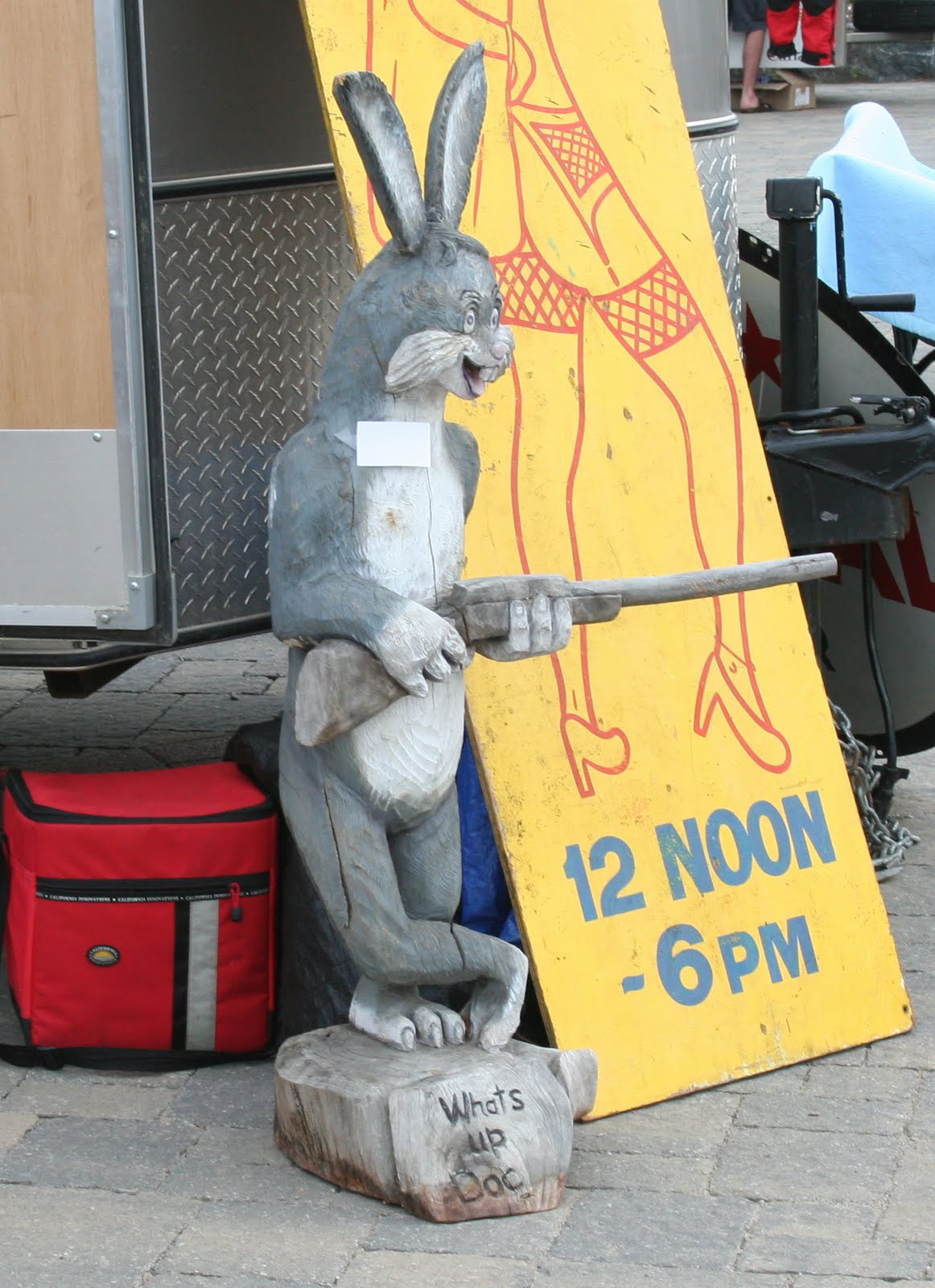
No, not Bugs Bunny!
But sometimes I'd like to shoot our bugs with something other than a camera.

In Muskoka...
May is blackfly season, June begins mosquito season, by July the deerflies fly off with chunks of your skin, then the horsefly, even larger, haul chunks of your carcass.

Living, as I am, in Lanark County, near Perth, we are about 5 degrees warmer, and the warmer, more temporate climate, means that mosquito season begins earlier. The blackflies are almost gone, as the heat of the day dries up the ponds where they laid their eggs last fall.

deerfly
mosquito
I posted on Facebook that I have never been bitten by a blackfly, mosquito and deerfly all on one day! The mosquitoes like the cooler mornings and evening. The deerflies love the heat. We live in the middle of a protected wetland. We are sitting ducks, er... humans!


There are ways to protect yourself. If you haven't protected yourself, be sure to get something to put on the bite afterwards, especially for children. When I taught school in Parry Sound, kids would come to school with their legs covered in bug bites. It pained me to see it!


Patches for your cap, found at Lee Valley Tools

Bug hat
Bug shirt - you can spray the outside of the shirt
with bug repellent.
The deerflies bite right through clothing!
Blackfly bite
 Bug spray, if you don't wear long pants, will keep them at bay. For awhile, if you aren't, say, gardening!!! Once bitten, treat the bites right away with something. It really helps.

5 days after the bite

Spider on electric toothbrush.
They eat bugs!


Lyme Disease Lanark County Health Unit

- As temperatures rise above 4ºC, the Leeds, Grenville and Lanark District Health Unit would like to remind you that while enjoying and working outdoors you should take precautions to avoid being bitten by ticks. Lyme disease has been identified in the health unit region and is now considered to be a risk here.

The symptoms of Lyme disease usually happen in three stages, although not all patients have every symptom. The first sign of infection is usually a circular rash called erythema migrans or EM. This rash occurs in about 70-80 percent of infected people. It begins at the site of the tick bite after a delay of three days to one month. Other common symptoms include:
  • fatigue
  • chills
  • fever
  • headache
  • muscle and joint pain
  • swollen lymph nodes.
If untreated, the second stage of the disease can last up to several months and include
  • central and peripheral nervous system disorders
  • multiple skin rashes
  • arthritis and arthritic symptoms
  • heart palpitations
  • extreme fatigue and general weakness
If the disease remains untreated, the third stage can last months to years with symptoms that can include recurring arthritis and neurological problems.

Deerfly patch, and
I sewed in hanky/flaps for protection
Although rarer than Lyme disease, there are other infections that can also be contracted from blacklegged ticks. These include Anaplasma phagocytophilum, the agent of human granulocytic anaplasmosis; Babesia microti, the agent of human babesiosis and Powassan encephalitis virus. The precautions outlined above will also help to protect individuals from these infections.


Sunday, 3 July 2011

2nd Annual Perth Kilt Run, 2011!

In the morning we attended the antique show. In the afternoon, we hustled back into town.

Along the 8km route, many were cheering the runners/walkers on, one couple lifted a glass of wine as we passed!

It is a fundraiser for MS Ottawa. It is the second annual kilt run!

The Running Goat, in Perth, organizes it. There were lots of events.


Last year the race was capped at 1210 participants. That is the year Perth, Scotland, was founded!

Perth, Ontario was founded in 1816.

The 2010 race made the Guinness Book of World Records for most people running in a kilt!
Everyone is of Scots descent on this day in Perth.


First in


I took a lot of photos at the end of the race. The first man and the first woman over the finish line. Lots of kilts, many ended up at the pub! A man in a kilt on stilts. The town crier was there, as well as the provost from Perth, Scotland! Bagpipes, of course, at the finish line.


Saturday, 2 July 2011

Signs of the times


Round Robin Challenge: Signs of the Times

July 2nd
I like drive-by-shooting. I have been collecting signs from around the place. No rhyme nor reason. Just for fun. I once thought I'd create a learning activity from them, but then I burned out and quit teaching! Music: Mocking Shadows, "Blow the Rest Away".


Round Robin

Frog in the garden


My roses do not smell much, they are beautiful to look at, but when the catalpa blossomed, it was heavenly.

The incredible yucca gloriosa  plants, growing in my garden. They are in bloom and I wish a had a smell-o-blog. I can put in photos, put in audio, but the smells...
The stems grow large. The birds and bees love them! The woodpecker whack away at the seeds late in the fall.

Trying to take a photo of my yucca, I nearly stepped on large a brown leopard frog. Hubby, out getting the morning newspaper from the mail box, was dispatched to find the camera.

Now, getting the morning paper for a man who is a bug magnet, is a difficult task. The deer flies would cart away a whole deer. This is why we've seen few deer on our lawn in summer. Deer flies prefer the hot sun. Deer prefer not being ravaged by deer flies. [There is a fawn on the neighbour's property.]

But the speed of the traffic is amazing. I cannot imagine why we don't have more accidents.

Inner thigh bright orange or yellow
Who is happy in this season? The frogs!
We have grey tree frogs, two on the back porch. I've never seen them so large. Englebert tree frog has disappeared, no longer living in the mail box.

The ones I found in Muskoka were much tinier.
These can be 3 - 5 cm and Englebert was that wide!
The teeniest are the spring peepers! I love their songs, too.

Gray TREE FROG

  • Only found in Ontario, Quebec, New Brunswick.
  • Call is short, bird like trill. (Check my video of Englebert singing! Their songs are lovely.)
  • Calling begins in late spring
  • Light green to gray
  • Squarish, light coloured spot under each eye
  • Inner thigh bright orange or yellow
  • Breeds in wetlands

I nearly ran over a green leopard frog,
 like this, with the lawn tractor!

Can you spot the gray tree frog?
Frederick tree frog lives in the planter. Under it, perhaps, and peeks out. When the kittens walk by, or any of us, it ducks back under the lip of the planter.

A leopard frog I nearly creamed while cutting the grass on the lawn tractor. I put on the brake while it hopped off. Last time it was a wee bunny. It is dangerous for the critters. But back to the frogs!
Northern Leopard Frog

I caught him in my front garden. Had to grab a photo.

  • 5 - 9 cm long
  • Found in every province
  • Call is a gutteral snore followed by a series of clucks, similar to a wet finger rubbing a balloon
  • Dark roundish spots, encircled by a light ring
  • Breeds in open, temporary or permanent wetlands
  • Endangered in B.C. and Alberta

Camouflage!
Bull Frog

My brother and me and bullfrogs!

  • 9 - 15 cm
  • Found in all provinces but PEI and Newfoundland
  • Call is a deep jug-o-rum
  • Green to brown with no dorsolateral line across back
  • Fold of skin from eye and around eardrum
  • Male has bright yellow throat
  • eardrum twice the size of its eye
  • Breeds in permanent wetlands
  • Tadpoles take two years to mature

Frogs ar amazing. Permeable skin, they take in water. They hibernate over winter in the muck of the pond.
bullfrog tadpole
frog's eggs in their protective jelly
Amphibious, they spend part of their lives in water, part on land. Frog's eggs are laid in a jelly-like mass in a pond. Susceptible to UV rays, they may be at risk from ultraviolet light as the ozone layer depletes. They are totally dependent upon temporary or permanent wetlands, and cannot depend upon lakes. The eggs are laid in ponds beside lakes, or flooded meadows in spring, where the water is calm. Herpetologists, scientists who study amphibians and reptiles such as frogs and toads, have discovered since the 80s that frog populations are
Camera Critters
More camera critters #169!
diminishing with the destruction of wetlands.
Connect with Nature 

Frog Watch Nature Canada
Frogs of Eastern Canada


Friday, 1 July 2011

Manual airline reservations prior to computers!

Life before we had computers... Brian, my husband, and JL, my son-in-law, speak of the development of the reservations system in the airline industry. Before computers: who can imagine this? It involves stickers and is almost as bad as communicating with tin cans. It involves clothespins and early computer development. Jean-Luc, our son-in-law and a software encryption engineer, speaks about NORAD taking over the technology developed by the airlines, to assist them when computers were first invented.
Hubby joined the airline in 1979 at the data centre.
People remembered when customers would phone in, have the outline of the airline on stickies.
When you booked a seat they put the sticky on particular seats, and put the others onto a cardboard piece of paper onto a clothespin where it went onto a clothesline and into central source in another office.
Pneumatic Tube internal mail system, Commerce Bank ca. 1931

Flights were written in long hand, page after page. Every page added by day, week, month and year by column. Senior management were young, in their 30s, personal computers were so new that they though that two people could share a computer. These were dumb terminals, not PCs. They were at the forefront of the industry, using large data systems. The first sale of a computer was to American Airlines. IBM sold it, after talking to an AA senior president. They thought the market for computers was about five. The first discount airline was having the carriers for breakfast, as they could manage sales. American invented inventory control. Now used for hotels, airlines and drove Peoples Airline out of business.

Then, I found this one.


Now, you can track a flight online.


Happy Canada Day, one and all!

And a marvelous welcome to the Duke & Duchess of Cambridge who are visiting Ottawa.


Photos from the Gravenhurst Market.