Showing posts with label volunteers. Show all posts

Friday, 13 December 2013

Loon on the frozen field – missed the 'go south' memo

Chompy –and what a beak!
I don't know why I volunteer to do these things. We had some time. My regular Thursday morning volunteer gig was cancelled, tutoring teen girls. I totally forgot, in the emergency, that I was to participate in a Webinar on Dementia for my volunteer work. People needed to have a rescued loon delivered from Perth to Napanee, and they had to get it back into water within 24 hours. Napanee has a wild bird centre. I thought I could do it.

There were mistakes.
Plan A 
Firstly, they told me it had to go to the Wild Bird Centre in Napanee. I checked with hubby. It's only a 90 minute drive, and the sun was out. Sure.
Then, when I made the phone call to the Nepean centre in Ottawa, they said it had to go to Nepean. No worries. That's only an hour away.
Plan B 
I asked the Nepean Wild Bird Centre if there was anything I needed to know. Did I need to wear gloves, as was suggested by the rescuers?  It's not good to get human and/or foreign goop on their feathers. The person answering the phone told me no. No special instructions. She gave me their address, and I wrote it down. We'd often driven that way to visit the kids.

The rescuers said they would put it in a box, since it could get its neck stuck in a dog crate's bars. They didn't have a box, but it was sitting in a dog crate. We had a cat crate, and that wouldn't be a problem. I put towels in the bottom. When we arrived to pick it up, they corrected us. Not going to  Nepean. No nice lunch in the city. We were off to Napanee. Sure. Change back to Plan A.

My video of Lake Effect Snow
Skywatch Friday
It was unable to fly. It's rear legs appeared frozen.  The wings were damaged. The brave man who had caught Chompy (in his shirt sleeves, in a frozen farmer's field, using his coat to capture it), was called back the office. It was sitting quietly in a dog crate, and he began to load it up for me. He grabbed its neck with his gloved hand, it grabbed his coat sleeve with its large beak, and he lifted it up and popped it into our crate.

Along we drove on centre bare highway, with storm clouds looming from Lake Effect Snow. After 20 minutes Chompy seemed rather upset. We were miles from anywhere. It seemed as if Chompy had thawed out and was good to go. My instinct was to stop at an open river, there were a few on the way, but not many, and throw it in. They need open water to run fast enough to become air borne, the lakes are mostly frozen over. But what is it WAS injured?
Powerful wings - on Lower Rideau lake


Eventually, it calmed down. During another pit stop I was afraid to look. I regretted our decision to volunteer. When we arrived in Napanee, a staff member picked the crate up and took it into the back room. She said that she needed to know where it was found, and that we should return it to the open water. We had to stop twice for pit stops. It was a terrible drive. It was happy in the enclosure. What was I thinking to put hubby through this? He adores animals of all kinds.

The staff member called in her supervisor, who inspected the bird in the private back room. She came back out to lecture me, telling me that I should not have used the crate. Chompy had smucked her beak and wing on the bars trying to get out. Lesson learned. I was just trying to help. The boss was terribly harsh. Yes, it had blood on its beak from trying to escape.
No, I didn't mean for this to happen, but how could this have been prevented? It just shows me that we shouldn't interfere in wild life. We rescue so many wild things, hopefully take them to registered wild animal sanctuaries (it's illegal to keep them otherwise), but are we doing them a favour?

Someone with knowledge and education could have told the people who captured it to bring it to some open water after checking on its condition before we spent three hours on the highway.
Or, on finding it seemed OK after it thawed, taking it to the nearest open water, which is where the Centre said it had to go back to eventually. I'm not so sure. It's supposed to fly south across hundreds of miles, surely it could find its way south? There was no way we were making that drive back. Why didn't someone tell someone? Why didn't someone, with information and authority, tell me what to do properly before we left the house? I asked.

Why did they let me use my time, gas, and energy, only to chew me out upon arrival?
Happily fishing in summer
Loons at the beach
This is not how to treat a volunteer. I am angry and frustrated. I feel badly for Chompy, but I made the right decisions at the time with the information I had been given.

 Let them use their anger on those who abuse animals, seniors and children. This bird could have frozen to death in the field, or been eaten by the wolf or coyotes. That would have been nature. The people who run these non-profits need to read the recent literature on how to treat volunteers. We retired volunteers and shadow boomers (at 43% of the population) carry the weight of many programs. My hubby has had worse injuries trying to get our rescue cat, Mitzi, into this crate to take her to the vet. Abused by one family's dog, she had huge mental issues. She eventually died of aspiration pneumonia, but after some good years with us. R.I.P. dear Mitzie. Hubby had to go to the doctor to get a tetanus shot.
The things we do for animals!

calm in the crate
They change colour in winter
Arrival in Napanee
There is nothing more haunting than the sound of a loon.

Loon on Otty Lake, Lanark County from Jennifer Jilks on Vimeo.

Friday, 26 October 2012

Grants and Federal and Provincial Parks


I visited Algonquin Park as a child!
Don't you love the glasses?!

 I've visited  20 parks, that I can recall. Algonquin Park was my first!

There is a difference between Federal and Provincial Parks, but we are blessed with a fair number of natural places to visit. Both have Learn To Camp programs and journalists seem to have a hard time differentiating them. No matter. They are parks!


Federal vs. Provincial and Public Ownership
Less than 11% of Canada's land is in private hands ; 41% is federal crown land and 48% is provincial crown land. The YUKON, the NORTHWEST TERRITORIES and NUNAVUT are administered on behalf of Canada by ABORIGINAL AFFAIRS AND NORTHERN DEVELOPMENT through the Territorial Lands Act and Public Lands Grants Act .

The wonderful volunteers picking up garbage 
at the side of the road in Algonquin Park were very busy. 
Wish we'd had time to help!

Who Owns Park Land?
The provinces sold crown land to homesteaders, farmers, business owners and granted land to demobilised soldiers (200 acres for enlisted settlers and 600 acres for officers); regulated the use of resources: forestry, mining, furs; manage recreational land use such as fishing, hunting, camping. (Read more at: Ghosts of the Day 1, Ghosts from the Day - Part 2, | Ontario Visual Heritage Project. Much harm was done in places like Georgian Bay, where for-profit clear-cutting logging conflicted with the fishing industry. Silt destroyed spawning grounds in Georgian Bay, ruining a way of life for all. Some park lands were expropriated from landowners in the early development of parks, such as the local Lally Family in MPP.
Sharbot Lake in her fall colours

Bon Echo visitor crosses the road
Friends of Ontario Provincial Parks are community-based, non-profit groups what help fundraise, and support the activities of parks. They support the interpretive, educational and recreational objectives of our parks. All have a volunteer board of directors, general members, and/or volunteers.

Many non-profit groups apply for government grants to support volunteer work, hire employees. This is why there is a Board of Directors, to ensure that, as Transfer Payment Agency, money is spent wisely and according to Canada Revenue laws, good governance protocols and fiduciary responsibility .

The beauty of this, is that hard-working volunteer fundraisers are not hampered by Ontario Parks, Federal Parks cutbacks, or Capital Expenditures funds. Grants are numerous:

Sandbanks Provincial Park photos
a) Trillium Grants  b) Cultural Strategic Investment Fund grant c) Community Infrastructure Improvement Fund Grant: Valley Heartland, to name a few.

By the way, if you are interested in reading about park life from the view point of a park ranger, make sure you read Nevada Barr's books. She is a mystery writer, also an experienced USA Park Ranger, and sets each book in a different US park. Make sure you read them in chronological order, as she develops her heroine/main character (Anna Pigeon) over the series!


Pancake Bay

Murphys Point Park
Silver Lake
Lake Superior Park
Prince Edward County
Lake on the Mountain,
Sandbanks Park

Yes, I drove
the Gargantua Bay road


Sparrow Lake - Federal

Mamainse Harbour -Federal


Blind River -Federal


Wednesday, 24 October 2012

Heart of Hastings Hospice - a field trip

Hospice Muskoka has two palliative care hospice beds
in Bracebridge hospital
There are amazing people in rural Ontario. Cottage Country increasingly means a lot of us who are retiring to cottage country. With our health intact, our family's raised, we can now turn our energies to volunteering. Madoc has a wonderful park, built with grants, and it is a great place for kids to play!

I have now volunteered for Hospice in both the Muskoka region and Lanark County, Ontario.
Hospice Muskoka runs children's Expressive Arts Therapy Bereavement groups, as do many. My local hospice group has bereavement groups for adults and children. Dignity House Day Hospice, in Perth, Ontario, is an adult day away program for those with life-threatening illnesses.
The big cities have their health issues; the small towns have theirs. I was amazed to travel to Heart of Hastings Hospice, where they have successfully bought and renovated a hospice building, with three years of sustainable funding. The building houses their hospice office.

June Callwood Award
I first became aware of the opportunities for hospice-type volunteering, reading the book, Twelve Weeks in Spring; A woman's seminal role in the hospice movement.
A woman's seminal role in the hospice movement. Twelve Weeks in Spring is the inspiring story of a group of people who came together to help a friend battling cancer, and thereby discovered their own unexpected strength and humanity. In February 1985, 68-year-old Margaret Frazer was told by her doctor she had terminal cancer. A retired, single woman, whose family was far away, she faced a situation all too familiar in our society -- a lonely death in a sterile hospital.

Many of the women in the Heart of Hastings Hospice organisation have this award:

June Callwood Awards: 2012 Recipients

– April 20, 2012 5:00 AM This year 11 people and seven organizations from across the province are being recognized with the June Callwood Outstanding Achievement Award for Voluntarism.

Doris Bush and Dr. Janet Webb, both hard-working
members of Heart of Hastings Hospice
A very special award

Flowers for the volunteers
They invited me to speak at the AGM. Here is my PowerPoint presentation. I wrote about them after our visit in August, 2012:
Jennifer, happy to be welcomed to the Heart of Hospice
as a guest speaker. 

Heart of Hastings Hospice, Madoc, Ontario

 in Madoc, Ontario. They have a robust website, with photos of the recent opening, Aug. 18th.
Myths of hospice abound. Palliative care is a type of healthcare delivery, when interventions and treatment plans have changed to a palliative strategy: keeping the client comfortable.

In the USA you must be declared palliative to qualify for services. This is not the case in Canada. Individuals qualify for Home Care based on various indications.

Thursday, 16 August 2012

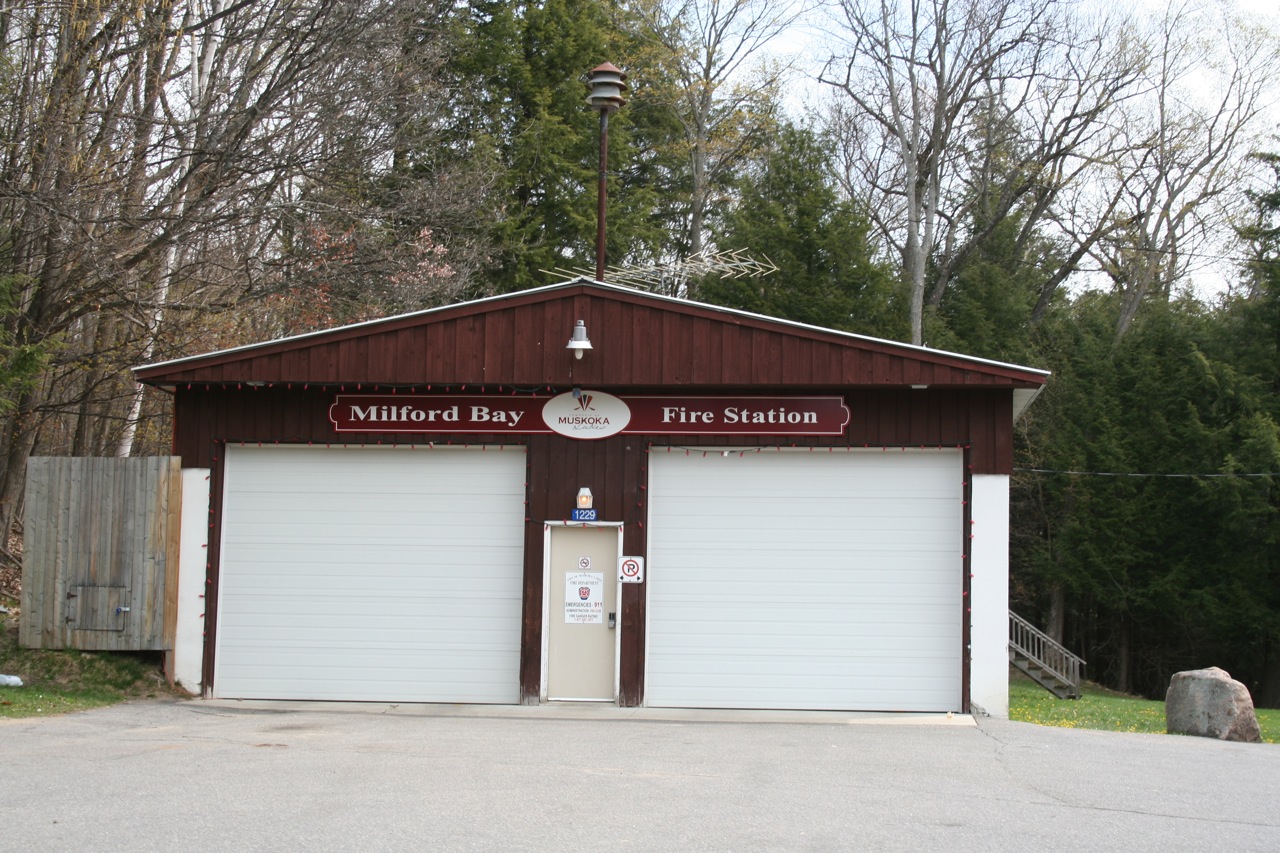
Milford Bay Forest fire: across 6 hectares

I love the Milford Bay area. As with many rural places, they have volunteer firefighters! They sure earned their pay this season. Below are photos from a 2010 pancake fundraiser.

The fire may be out, but the scar remains
THE MUSKOKAN — The brush fire that blazed across six hectares of Milford Bay on July 24 is out, but the damage it caused will be visible for years to come. Believed, but not proven, to be the result of a careless hitchhiker. 


Wednesday, 13 July 2011

Merrickville Firefighters!

Classic firefighting truck.

While at the Classic Car Show, the volunteer firefighters, bless them!, were burning...um, cooking up a storm!
We have always supported our volunteers, especially these men and women.