Showing posts with label port hope. Show all posts

Thursday, 4 November 2021

Movie Review: Love in Whitbrooke

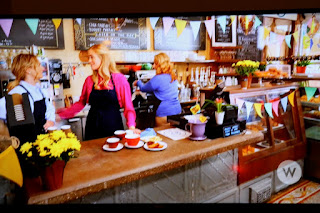
 I was particularly struck by this shot in the movie, Love in Whitbrooke. We've stayed in this hotel in Port Hope! [Port Hope, Ontario in 2009] My great-grandmother, Mariah Mallette and grandmother Anne lived in and ran a boarding house in Port Hope.

It's a pretty white main cast. Hallmark has been improving this, especially since they film in Canada, with newer movies. 

It's a typical romance, and one does have to suspend belief, but on a rainy day... 

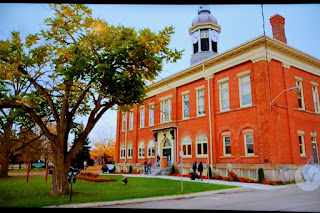
The signage for this building says Port Hope Administration Building. That confirmed it.


The IMDB database says it was filmed in Hamilton. I did some research, and there were many local news reports that it was being filmed in Port Hope Oct. 26 – 30, 2020.

~~~~~~~~~~~~~~

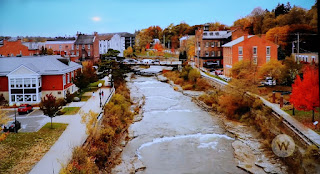
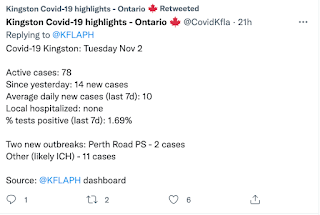
We'd planned to visit and have lunch with friends in Port Hope. Then we changed our minds. We thought we'd meet in Kingston, a midway point for both of us, but look what I spotted from Kingston...


 COVID is rearing its ugly head, still. We've not many cases here, but they are worrisome. They pop up from time-to-time.  
We've achieved a lot in our Health Unit, despite the actions of our COVID-denier MPP. 
"Today, the Leeds, Grenville and Lanark District Health Unit remains the leader in Ontario, with 95% of eligible residents fully vaccinated, and 98 % having received one dose."

Sunday, 21 April 2013

The Land Between: Southern Ontario

Forgive the length, but I learn by writing down what I read, hear and research. I've researched the history of Nepean, a suburb of Ottawa before.

I watched this video, The Land Between, online. It is fabulous.
There is even a The Land Between Circle
My daughter, a hydrogeologist, has sparked my interest in geology. We call her rock girl!

TVO Documentary: The Land Between

The documentary features our amazing ecosystem in The Land Between, which has bioclastic limestone. This is rock created from shells of dead sea creatures, and is more than 50% calcium carbonate.

Torrance Barrens
The glaciers scraped the land of its soil
A Muskoka cottager, Peter Alley (1943 - 2006), was curious about the land. He cottaged at Muldrew Lake, in the region of Muskoka, not far from where we 'cottaged' for 50 years and my parents retired there in 1991 (Bala).
Alley asked questions of the pros, featured in the video, and I learned a lot.

Famous Spots

Torrance Barrens (we took a walk there in 2008), is a good example of the area.
 His small lake that made him curious.
Devoid of soil, this land covers many regional boundaries, with north/south highways.

Inhabited for 12,000 years, colonialists have imposed themselves on the land and its peoples.

Flora and Fauna

It is an area rich in flora and fauna.
It is made up of flat limestone, with little soil, too tough in spots for trees.
only place for 5-lined skink!
I saw one once.
Too quick for me to photograph it.
In terms of land development are the shorelines, which are the most vulnerable. Everyone wants a cottage by the lake.
  • Five-lined skink, Ontario's only lizard.
  • Turtles
  • American Eel: in the Sargasso Sea it spawns, when it is the size of a shoelace it comes inland.
  • Loggerhead shrike: songbird feet but a predator with a hooked beak feeding on grasshoppers, small mice, and they impale prey on a hawthorn tree. There are two pockets of them left in Ontario.
  • Lots of interesting plants: wildflowers and grasses. 
  • Deer, moose, bear, muskrat, blueberry, pine.
  • They've been here 10,000 years: native species from north and south meet here in the middle.
These I photographed in Gargantua Bay

Evidence of Ancient Peoples

In terms of Aboriginal peoples, the most interesting are Pictographs at Mazinaw Lake, 260 of Petroglyphs Provincial park, carved into the soft, metamorphic rock. Carved as instructions for the young people, they tell us, all created at least 500 years - 1000 years ago, at the very least.

Made from an iron-based ocre stain from the cerebrospinal fluid of sturgeon. The ocre washes off but the chemically changed surface remains.  They would have had to canoe in to do them. These are famous places for trading, celebrating the land, and for transportation to winter/summer grounds.

Rich in food sources

Inland there are many sources of wild rice, which native Peoples harvested.
Then there is the fishing. Especially, a 3000-year-old fishing weir: Mnjikaning Fish Weir Circle. This was a brilliant tool.

Fish Weir 

- Fishing Tool of Hunter-Gatherers

A fish weir or fish trap is a step forward in fishing technology, used in North America for the past several thousand years.
Began to practice agriculture.
Beausoleil Island had 7000 years of occupation. Trading was important, traveling by what is now the Trent Waterway system.
Hunter Gatherer Anishinabek, Algonquin/Huron, and the agricultural Wendat ('people who live in houses'). (Common Era: 1550).
Haudenoshone and Wendat had difficulties, exacerbated by the French and English who were fighting over the resources. Beaver and other furs became scarce. There was a battle south of Lake Ontario (1615).
Champlain visited The Land Between. He writes of three days plagued by rain and snow. He created maps. The 1649 battle ended any cooperation. The Wendat were decimated by pandemics and conflict with the Haudenoshone, and the Wendat left. May, 1904, the Missassaugas decided to attack the Mohawks in Georgian Bay, on the Island of skulls. They took the Portage Rd. up to Portage Lake. 1000 warriors were slain. The war ended in 1701. Peace council at Lake Superior.  Ojibwas hunting for north after 50 years of war.
The French were defeated in 1759, Chief Yellowhead of Rama was a hero of the time. Some believe it is this chief for whom the Muskoka region was named. This is a good read:

Chippewas of Rama First Nation

Under the leadership of our hereditary Chief, Chief Musquakie(Yellowhead) who ...The fish fence at the Atherley Narrows, is located near Rama First Nation.


Agriculture

Abandoned barns and farms are evidence of the inability of this shallow soil to keep an agricultural society. The Hunter Gatherers were well able to live here, especially with the deep native respect for the land and its species, and the circle of life.
Native Peoples grew the three sisters: corn, squash and beans.
Settlements filled up on the shores of Lake Ontario and spots further north were less tillable soil. Another good read, available in a video,
Methodist Missionaries started First Nation Reserves. Cold Water Reserve was considered too valuable and was taken back by the government. The government insisted land could not be settled until treaties were made, but they were rushed through and poorly made. This has led to a long legacy of treaty litigation.

The Williams Treaties: Lament of a First Nation. Peggy Blair
Basket clause: they gave up everything, hunting, fishing, trapping, picking berries, birch bark,
There wasn't enough land to keep them alive. They were called poachers and game wardens to harass them. And still the racism persists.
The Mississauga thrived on the land, but were no longer able to travel to meed their needs. They couldn't farm on these lands, and the outlawing of Weitung's fish weirs meant they couldn't fish according to traditional ways, harvesting what they needs, throwing back pregnant females and young males. Like my grandmother, brought home when lost by local native people (read her story here), many settlers, map makers, fur traders, corporations (e.g., HBC), would not have survived without their help. It is amazing that First Nations have survived despite this exploitation.

Logging

Red and White pines were clear cut and decimated by logging. Slash and burn, before we knew better. They used the rivers for moving the logs.
Some dude named Need developed a lumber business in  Bobcaygeon. On Sturgeon Lake, Nov. 6, 1838, the first lock was opened. Trent-Severn locks links Ontario and Georgian Bay.
Log drives employed many and killed many, as well.

Logging & clear cutting decimated Georgian Bay fish stock
as spawning grounds were destroyed by silt.
(Public doman archive photo)
The 1880s feud in McDonald's Corners between Boyd Caldwell and Peter McLaren was infamous. It was on High Falls on the Missippi River. Caldwell was using McLaren's improvements to move HIS logs. Taking each other to court, the courts ruled that the rivers were commons, you could catch fish and need not ask anyone. It was available for use by all travellers.
See the Rivers and Streams Act of 1884 (Historical Plaque).

I spotted this on a trip along highway #7
Colonisation roads were built from Lake Ontario north. More work for hungry, needy men and their families. Safer, likely, than logging. You can see these roads, where better roads were created late. I took a trip around our old lake and found the Oka Colonisation Road on my travels. Now, these remote roads are exploited by snowmobiles and ATVs.

The government, needing settlers, felt that land capable of supporting pine trees could support 8 million farmers. Land agents worked to convince immigrants to settle in The Land Between: Free Grants and Homestead Act of 1868 promised 100 - 200 acres if settlers cleared the land and farmed. 
Even Sir John A. Macdonald knew that this was bad for the environment.

nSir John A. McDonald wrote to the premier of Ontario:
“The sight of the immense masses of timber passing my window every morning constantly suggests to my mind the absolute necessity there is for looking into the future of this great trade. We are recklessly destroying the timber of Canada and there is scarcely a possibility of replacing it.”


My great, great grandparents
He was an organist
from England and France.

My great grandmother
she opened up a rooming house
in Port Hope.
People were failing at clearing the land, those who arrived later. You need only read the diaries of Susannah Moodie and Catharine Parr Traill to understand how military officers, securing land in 1832, were unable to be successful and farm. Transplanted from England, and more familiar with embroidery and fine clothes, rather than living off of the land, they didn't know how to farm.

They had to clear several acres a year to keep their claims, and many opted to go west. Arable land needed a jack of all trades, and diverse pioneer farmers with many skills. You can see it some of the farmers we serve through Community Home Support here in Lanark County. Carpentry, building their own homes, dairy and beef cattle, building fences, adapting to the new technology of their time.
They could work as lumbermen, and then sell produce to the loggers.

The limestone was suited to cattle ranching. In the 1870/80s, they began to make it more successful. They lost sheep to bears, and then reverted to cattle.

Masonry

Algonquin College Campus - Perth

George Laidlaw imported a Scots stonemason for ten years to build stone walls. One had to do something with the immense amount of loose rock on the land. Perth, as well as many other towns, have some amazing buildings. Algonquin College offers training in repairing these old buildings. I did a post with photos, featuring some of their students. In the good, old days they used limestone to make concrete.
Repairing Perth town Museum walls


Industry

In Donald, from there to Tory Hill, they clear cut for a factory. This factory employed 300 people. They used the clearcut wood to make wood alcohol, necessary for dynamite.
Minerals

Abandoned barns - so sad
Limestone
Cave Eldorado, Marmora, Madoc had some gold. Ontario's First Gold Rush, in Hastings County, near Madoc. Gold, silver, iron, arsenite, uranium, cobalt, stellite, all created for the war effort, but petered out in time. They abandoned the site in 1941, to be cleaned up by taxpayers. 750,000 cu meters of waste with arsenic, cobalt, copper, radioactive waste material. Deloro mine site project is a major waste site in Ontario. I had never heard of it!

Tourism

Of major importance to those who survived in The Land Between, is tourism. A good read is Raisin Wine, which explains how tourists invaded Port Carling, and First Nations could no longer hunt and fish, while whites exploited the land and water. Many lived in poverty, serving as part-time carpenters for people who visited in the summer and had the money to maintain two homes.
Snapshot courtesy Swift River
One interesting feature of The Land Between is the Kirkfield Lift Lock, finished in 1907, taking boats from Lakefield to Lake Simcoe.

In Muskoka, they still argue over the Bala Falls. Originally built to regulate water levels which fluctuated up to 9' over the seasons, they needed to be able to run the steamships for the tourists  who went north from Toronto to Muskoka for the summer.

In the 50s, the falls harnessed the power of the water for electricity. It was abandoned for this purpose, but 'Save the Bala Falls' and Ontario Wind Farms are generating a lot of controversy!
photo courtesy Swift River

I find it sad that tourists forget the rich aboriginal history of this land, and prefer to keep their precious frontage for themselves to exploit as they see fit. The quiet of the land, disrupted by transportation technology: motor boats evolved from the canoe, to the sleek, mahogony Ditchburn boats, boats with disappearing propellors (Dippies), and now the incredibly large, powerful, noisy boats and PWCs of the new millenium.
Imagine the hours and the
blood, sweat and tears
to create these barns.

Thursday, 8 October 2009

Port Hope, Ontario


More on our travels...
While this is not Muskoka, small towns in South and Central Ontario are alike. Created in the late 1800s, these towns centre around early farming communities, as people learned to make a living in a harsh climate, fighting malaria from the mosquitoes in S. Ontario bogs, swamps drained, bartering took place between with potash, wheat, pork, poultry, bartered for sugar, salt, clothing, bots, tools. In 1819 Port Hope had 4 stores, 2 taverns, 2 breweries, 2 distilleries, a grist mill, saw mill and carding mill.

By 1822, with the Missowaga tribe recieving yearly presents from the Government: clothing, guns, ammunition, in return for land. There were 200 men, women and children, with baskets, brooms, wooden shovels to sell. Aboriginal peoples were bought out of their lands (Montagnes, 2007).

Towns and cities formed as people were able to conquer the land, plant the fields and create surplus crops. Then, specialization as landowners built mills, and surplus crops allowed the pioneers to sell crops at market.

Champlain visited the area in 1615, and misunderstood the fabulous government, structure, and dignity of First Nations. He missed the complexity of the Longhouse, villages surrounded by pallisades, and fire pits in which extended families lived together.

The beauty of the Oak Ridges Moraine, where Hurons and Iroquois fought over land and territory. This is where the hunters and gatherers set down roots: the three sisters: corn, beans and squash, picked berries, trapped and fished in the sparkling waters. After 50 years or so the longhouse would be abandoned and the people would move on allowing the land and the animals to recover.

By the 1670s, French fur traders had invaded, in their quest for money and furs.The United Empire Loyalists settled in. Missionaries moved in to convert all those to Christianity. Blackflies and mosquitoes likely persecuted them in retribution! Pioneers, settlers, those awarded land for military service, all made their mark. Mills were built; the ubiquitous churches, too. General stores for

Port Hope is a municipality in Ontario, Canada, located in Southern Ontario about 109 km east of Toronto and about 159 km west of Kingston.

Port Hope is an interesting town. It is an old town, too! Relatively slow growth from 1880 to 1960 resulted in much of its original architecture not being demolished in the name of progress. Port Hope's downtown is celebrated as having the best preserved 19th century streetscape in Ontario. The town's local chapter of the Architectural Conservancy of Ontario and the Heritage Port Hope Advisory Committee are very active and advise on the restoration and preservation of architecturally or historically significant buildings.

Roads were improved and horses were supplanted by trains.

With over 270 heritage designated buildings throughout the municipality, Port Hope has a higher per capita rate of preservation than any other town or city in Canada. Downtown businesses are regulated by the municipality to maintain the town's unique character. A great idea, IMHO, as quaint towns are inundated with big box stores and Cheap-Marts. It changes a town forever.

The family story goes that Great-grandmother (Mariah Mallette, 1848 - 1924) ran a boarding house in Port Hope, I do not know where, and was also a caterer.
She was out working, when she realized Anne (1883 - 1978), my grandmother, was missing. Lo and behold, Annie was sitting on the knee of a distinguished gentleman. The man gave her a coin, and Annie was hustled back into the kitchen! The man was Sir John A. and Annie was in deep trouble when the party was over!

In doing research, I found that Sir John had been here to unveil a statue in 1889. This fits the time frame of our story.

For more reading:

The Great Farini - Port Hope History

The Great Farini, famous highwire walker, world circus impresario, and native of Port Hope, Onario, made an exciting walk across the Ganaraska River.

Port Hope History

A subjective look at the history of the area, featuring genealogical data, photos and slideshows, and narratives of people and events.

For more information, see Port Hope: A history, by Ian Montagnes. Also, a post on Kingston after our trip, for those with fond memories of that city: Kingston, Ontario Tour!


Sunday, 24 May 2009

My family tree - life in the bush

Introduction

This was originally an essay written in early 19family tree76. I tried to trace the family’s development from about 1800 through to the late 1900’s. My main source of information was my maternal grandmother, Nanny (1883 – 1978), who had her 92nd birthday on November 9th, 1975. She passed away after a stroke in LTC.

Family History

My Nanny’s name was Anne Butt. She was born in 1883 and she began by telling me all about her maternal grandparents. Her grandmother was English and her grandfather was Scottish. She does not know exactly how they ended up together but both of them came over to Canada on a sailboat. Eventually, they met and married. First, they lived in Portneuf, Quebec. Since the U.S.A. was so undeveloped, people were encouraged to settle there by granting them 60 acres of land to those who would farm it. My great-great grandparents took some land in Bay City, Michigan, in the middle of a forest, far away from any settlement. Bay City is about 100 miles northwest of Detroit, in the Saginaw Bay Area.

They built a log house with only holes in the wall for windows, which were covered with wooden slats. Needless to say, they used a fireplace for warmth and cooking. The fireplace must have been beautiful, made out of stones.

They had three boys at this time, but the children could not wander freely outside since there were Natives who would watch them from the forest and the parents were worried about what might happen. Since they were all alone in the wilderness, great-great-grandfather decided to do something to relieve the situation.

He took a clay pipe and some tobacco, and went outside, placed the pipe on the ground where the natives were watching, and put his hand in the air as in friendship. The Chief came out of the woods, went over to him, picked up the pipe and made some motions. After lighting it the Chief smoked for a bit, then my relative was motioned to do the same. At that point they shook hands as friends and it seemed the situation was remedied. It really did mean that they were friends because form then on the children could wander freely outside and if they ever became lost a Native would find them and bring them back to safety.

After making their peace in this incident, life must have carried on. I’m not sure how many children they had in total, but one of them was Mariah, who was born in 1848.
Their way of life was very typical of that day and age. It was survival on a very basic level. Their only food supply was what was grown, gathered, or hunted. The parents were the educators; the curriculum consisted of information necessary to run the farm: how to plow, when to plant, how to make clothing.

Moving on to my Nanny’s paternal grandparents, now, is a very different story. In the year 1842, they lived in Paris, France and had just had a child: William. The Mallettes had another child later, Julie. While in France, the children studied organ under a prominent organist. When William was 12, the Mallette family came to Canada. Both children kept up their organ studies and William studied bookkeeping, too.

When William was 25, he and his sister were playing the organ in Montreal in Notre Dame Cathedral. Eventually, the family moved to Bay City, Michigan, where William found a job as a bookkeeper in a grocery store.

This is where the sagas merge! Both William and Mariah were working in the same store. By this time, Bay City had grown into a town quite different form the way it was when Mariah was a child. It was large enough to have a store that could afford to hire a bookkeeper who had had training, and an apprenticeship. (Of course, we are talking about a ledger, ink and paper; no computers or calculators!) Progress was encroaching upon many places, changing lifestyles and values. Mariah now had what was a comparatively steady income in the store, whereas her parents farmed in a relatively unstable situation.

Mariah, who was engaged to be married, met William at the store one day. She was very good-looking young woman, you can judge by her photograph. The next day he approached Mariah and asked what the ring on her hand was for and, upon being told, he removed it! He immediately replaced it with a ring he had bought and told her they would get married. Mariah must have fallen in love because they were married three weeks later.

For two years they lived in Bay City, then they moved to Rigaud, Quebec, about 40 miles west of Montreal, where William’s parents first settled. They lived in Montreal and finally settled in Port Hope, which in on the north shore of Lake Ontario.

In the late 1860’s, they had three sons who died of diphtheria. In 1877, the Mallettes had another son, Harry, and in 1879, Mariah bore Fred, followed by Edward in 1880, and three years later, Anne, my grandmother. They lived happily in Port Hope until July 1884, when William died. In those days, Mariah was home with the four children. Now, she had to support them.

By this time Harry was 7, Fred was 4, Edward was three, and my grandmother was 9 months old. In a few years, the savings were gone and Mariah went into the catering business in order to support the family. When she had been in this business awhile, a memorable incident took place.

Mariah was catering for a party in a large house. She was upstairs with the guests. Anne, since there was no day care, had to go along and stay in the kitchen. Apparently, Anne became curious so she, too, went upstairs. She was fascinated by these impressive people. She was noticed by a kindly gentleman who wondered who she was and motioned her to come to see him. He sat her upon his knee were she sat shyly chatting until she was noticed by her mother. Mariah became very agitated and tried to apologize. Children, in those days, did not speak except when spoken to, and Anne didn’t realize what she had done. The man was Sir John A. Macdonald, and very generously gave Anne a ten-dollar bill. During that time that was about half of what the Mallette’s were living on each week.

Eventually, Anne and the boys went to school. It wasn’t compulsory and Anne continued going until she was 14 years old. Harry, Fred and Edward all became molders and went into apprenticeships after grade eight. By the time Anne was 14 they had all married and moved out. The school was a typical one-roomed schoolhouse with 24 children of various ages. The strap was the main form of punishment, but Annie, as she was called, didn’t get the strap because she was a good child.

They studied the three R’s very carefully. Arithmetic was very important, as was spelling and penmanship. They also took geography in which they drew maps. They didn’t have history or other related subjects. Every day they had about an hour of homework. If they didn’t do their homework they had to write lines.

Nanny remembered that they always wore long dresses to school, no skirts at all, never mind pants. (My high school, Jarvis, only allowed girls to wear pants to school my first year of high school, in 1970.) Nanny remembers pretend tea parties at recess under the trees in the sunshine. They played with dolls, tops, dollhouses, and toy dishes.

Lillian, Fred, MarionWhen Nanny was 12, Mariah stopped catering and began to run a boarding house. Anne, when she quit school, helped her mother on a full-time basis. They had a large house, with 19 boarders, to whom they fed breakfast and dinner. Mariah gave them full-course meals, including juice and soup. They also packed a lunch for them.

Every day Annie would clean the rooms. She would sprinkle tea leaves on the carpets and then sweep them up into a dustpan. Linen was always used for the meals, plus there was bedding, so there was a great deal of washing, done by scrubbing. At that time, they were living on about $20 per week after doing all that cooking and cleaning for nineteen people.

One boarder moved into the house in Port Hope. He came from Surrey, England, where his grandfather was the Mayor of Winchester. He had begun his apprenticeship to be a butcher at age 10, and was now going to be a butcher in Port Hope. When nanny was 20, she married this man. His name was Fred Butt, and they moved to Toronto. They opened up a meat and grocery store. Nanny did her share in the store, carrying 150 pounds of meat upstairs from the freezer.

Nanny had lived in Toronto ever since her marriage in 1903. After a year, she gave birth to a boy named Edward (1904 - 1905), who died a year later. He’d had been given a strawberry, which had caused something similar to dysentery. In 1906, Lillian Anna May (D. 1981) was born, Fred Cecil (1908 - 1983), and in 1909, Marion. (They are in the photo on the left.) In 1925, Marion complained on a Thursday that her legs felt funny, and she had her mother rub them for her. Eventually, this continued up her legs, and went through her whole body until 3 days later she died. There is a beautiful picture of Marion, showing long, gorgeous hair.

During the time Marion was growing up, Nanny had two miscarriages. Then, in 1925, 16 yeFred Buttars after her last child was born, and 21 years after her first child, Joan (right), my mother, was born.

Fred Butt, my grandfather (B. 1878), died in 1940. You can see his kindly disposition in this black and white photo, taken on their front steps on Cottingham Ave., in Toronto. My mother was 15 and had to go out and get a job. Nanny then worked for the Children’s Aid Society from 1940 until 1965, when she retired. She had 10 to 12 teenaged girls at a time and in total had about 400 girls, most of which left to get married.

Nanny was moved from her house on Cottingham Ave., in Toronto, to a small apartment, once all the girls had left. She lived there, when she became ill, too ill to live on her own. She was placed in a LTC home, which did not set well at all. She began believing that the nurses were spies, and that they were all out to get her. She had a stroke, and died in a Toronto hospital in 1978, one year before my daughter was born. She never knew her great-granddaughter.