 |
Cats know how to sleep!
So does hubby! |
I have been sent a book for review. I'm dubious about such things such as, "How to prevent
 |
| Healthy eating! |
dementia." It's much more than simply doing brain exercises to prevent a biological symptom of various diseases. However, this book includes strategies for living that will improve your life, keep you healthy and active, both mentally and physically, if not preventing death!
One of today's leading experts on brain health,
Dr. John Arden tells it straight: there is no single remedy for maintaining “
sharpmindedness” into old age. Nor can we prevent
dementia, but we can learn how to interact and live our best lives no matter our situation.
Neuroplasticity of our brains
He has done his research, for we know that our brains can be changed, if we change our behaviours. Just as we know that stopping smoking, for example, allows our lungs to heal and overcome the toxins smokers inhale. We know how complex our brains are, and that while toxins can cause cancer cells to grow, remember that some develop cancer through no discernible factors at all.
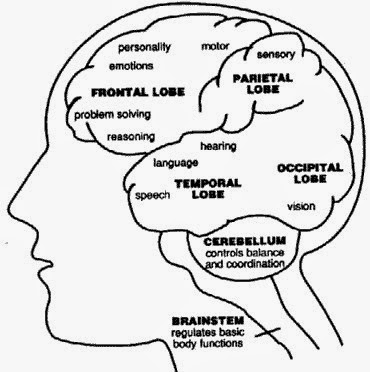 |
brain function
Frontal lobe, robbed of oxygen,
cannot function. |
Truthfully, this isn't so much a brain book, as a bible for healthy living. There are many myths about body and brain, and people who are jumping on the self-help band wagon, but it does boil down to healthy eating, exercise, living and loving well, and sleep hygiene.
What I find comforting, in reading this book, is that as we shift from middle age into old age, is that we need to keep sharp in different ways than when we were employed, and to keep active in different ways.
 |
ISBN: 9780071826549
Price: $27.95 CDN
|
This is why I continue to read and write, and blog about life, love and joyfulness. We know that in 1950 we could expect to live to live in the USA until about age 68, and in 2002 life expectancy was around 77 years of age. What are we going to do with these additional years? Life and living in our later years must be meaningful, in a different way.
If you are interested, as am I, in understanding our bodies, this is a good book for you. It explains the biochemical reactions in our brains as we age. It breaks down the research, and writes of the neurochemical changes that age brings. We can expect that our bodies wear out in certain ways, and we cannot necessarily prevent disorders, but we can do everything in our power to keep sharp by being active, volunteering, and paying attention to issues like cholesterol and diabetes.
Brain research
The aging brain does change, despite all these ideal habits. Neurotransmitters and the neurochemistry of aging brains means that there are more mutations, neurons shrink, we lose myelin, and synapses. In our teenage years, we are creating synapses, and learning how to learn, forming neural pathways, which are later pruned in adulthood. In our later years, we develop and strengthen these old pathways. For example the brain uses some of the same pathways to process music as we do math. This is something I learned whilst doing action research for my classroom curriculum. In older age, we may not be able to prevent senile plaques and neurofibrillary tangles (which prevent blood from getting to the part of the brain which processes abstract thought). Be rest assured that healthy, active older adults develop issues, which cannot be prevented, but we can play our cards right by healthy living.
 |
PET scan shows brain function.
New information. |
When my students would ask why we were learning algebra, for example, I'd tell them we were building dendrites to make all learning faster, better and easier. For those who eschewed math, or for those who complain about what we teach in elementary school, remember you are building better brains for old age.
Activities for healthy living
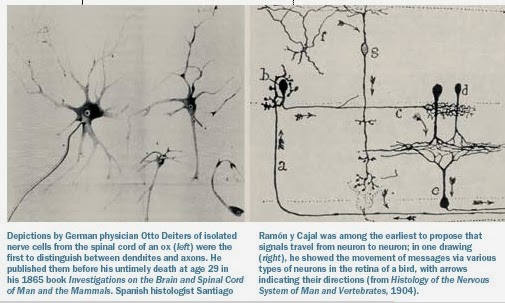 |
Dendrites connect the brain cells, allow us to 'think.'
They cannot function if they are blocked by plaques. |
Dr. Arden has broken down the vast amount of confusing and sometimes conflicting brain data into the five crucial “Brain Bible” factors to be mindful of:
- Education - Read and keep your brain active
- Diet - What you eat and drink directly affects your brain health
- Exercise - Starting a fitness routine is simpler than you think
- Relationships - The love of friends and family has a strong healing power
- Sleep - Get enough, but not too much, sleep
A few samples of Dr. Arden's tips for improving brain health include:
- Drink water even when you're not thirsty
- Take the stairs instead of the elevator
- Laugh a lot
- Don't drink alcohol before going to bed
- Eat fish at least twice a week
 |
| homemade meatloaf |
About the Author
Dr. John Arden is the director of mental health training for the Kaiser Permanente Medical Centers and oversees one of the largest mental health training programs in the world, operating in 24 different medical centers throughout Northern California. He also practices part-time at Kaiser Permanente in Petaluma, CA and San Rafael, CA and for several years has been the chief psychologist at Kaiser Vallejo. He has written several successful books, including the bestselling Rewire Your Brain, as well as Brain-Based Therapy for Adults and Brain-Based Therapy for Children and Adolescents. For more information, visit drjohnarden.com.


