Showing posts with label journey north. Show all posts

Saturday, 7 December 2013

Journeying south - snowbirds and monarchs!

Momma and baby!     Bala, 2009
Retired snowbird! 
Yes, it is that time of year. Both our retired snowbirds
and monarchs have gone to warmer climes.

I've written previously about the monarch populations. Due to the 2012 drought in North America, numbers were down in Mexico, where they overwinter. Only about 20% of the estimated population returned that terrible winter. There were other factors: pesticide use, habitat loss, but, for the most part, this seems to be in their wintering sites.

This last summer many have bemoaned th
Monarch caterpillar on milkweed
e fact that they saw very few, if any, monarchs in their yards and fields. I only spotted one, despite hundreds of milkweed plants! They were late arriving in S.E. Ontario and I didn't see it until July, 2013. They can lay two sets of eggs, once in July and once in August, during a good year.
They do require milkweed in order to eat and reproduce. But that is another story!

Yummy milkweed!
These are photos from previous years, when they were plentiful.

Sept. 2012
Sept. 2012

Port Carling library hatched some
July 2008 
Butterfly on a butterfly bush!
Fooler: Viceroy!
So lovely!

It's hard to say how many made it, and how many managed to reproduce over the summer. Journey North is reviewing their monarch data. They began to arrive in November in Mexico, after a long flight. This is a great information site, where civilians can track their sightings, and check out data from the pros, as well!

There are many factors to blame, aside from the drought, which many blame on Climate Change. Lack of habitat in Mexico, although that doesn't seem to be an issue here, in Ontario. Our fields are full of milkweed plants, but no butterflies.

Population Estimates
Every December, scientists visit the 12 traditional wintering sites and measure the area of forest the monarchs occupy. This chart shows the data scientists have collected for 19 years. Results will be released in March, 2014.
The question is: how many returned this year?

For more animal photos visit Saturday's Critters #1! 

Sunday, 22 September 2013

First day of Autumn: September 21st Rainfall: 46mm!

       SEPT             mm
2-Sep2
3-Sep20
9-Sep14
11-Sep44
15-Sep4
21-Sep46
130
Total rain: 130mm.
What a storm, what a dump of rain!
I'm glad we are high and dry, with gullies and wetland all about. After my coffee, I should go check out the frog pond! It rained all day, yesterday, and all night. Buster was somewhat grumpy. Somebody in my house has to go clean the eavestrough!

Today is the first day os the Autumn Equinox.
We've been happily getting sunny days for the past week.

The changing light levels are interesting, as well as plants dying back and going dormant, critters (wasps!) stuffing themselves. Journey North tracks sunlight, the changing seasons, migration information, as a crowd source. The hummingbirds as they disappear, and return, as well as other critters.

My bean plant, from harvested seed,
has now produced flowers!
I often document changes around me. Last year's drought was terrible. The bean plant set seeds mid-August in 2012. Now, September, they are just flowering with all of the rain.

Phenology: The Seasonal Timing of Life Cycle Events
Phenology is the study of the seasonal timing of life cycle events. You are studying phenology when you record the date a certain plant grows, a tree's leaves emerge, an insect hatches, or a migratory bird appears on its nesting grounds. The dates on which these happen each year are affected by factors such as daylength, temperature, and rainfall.
The Equinox is Coming!
Are days and nights equal on the equinox everywhere on Earth. Please report daylight hours.

They link to US data bases to determine your sunrise and sunset, but I found a Canadian site. I found it interesting comparing Ottawa and Toronto, the two major cities near us.

Ottawa

Toronto


Friday, 26 April 2013

Migration of ruby-throated hummingbirds

This was one of my mom's birds.
After she passed, I was slow to put up a feeder.
They let me know by peering in the window!
I put out food for them immediately!
There is a great website, especially for teachers, Journey North.
Visit All Journey North Maps <= here. They show the reports from last year, as well, for those of us who keep track and like data!

For example: Spring 2012
animation/map/data 


These little guys were here by March last year.
hummingbirds are moving north!
Tracking the trek north of our critters is a special pay-it-forward treat from our neighbours to the south. I am grateful for the people who report to the website.

I have put up the feeder, having watched the progress of the hummingbirds this year.

They were early last year, with our early melt and early spring.

Now is the time to prepare your feeders. There are things to remember with feeders. Do not use soap, or anything else like this, to clean your feeder. Simply use vinegar and water, and shake it up in the feeder. If there is scum inside, put in some raw rice and shake it up.


    Hummingbird Nectar Recipe

  • 1 part sugar to 4 parts water (e.g., i cup sugar, 4 of water)
  • Boil the mixture for 5 minutes to kill bacteria

Cleaning

  • Let cool and store excess in refrigerator until ready to use.
  • Thoroughly clean the feeder by rinsing with one part white vinegar to four parts water.
  • Do this weekly after the feeder is up and going, especially in hot weather.
  • Check to see if the nectar is cloudy, which could mean (deadly) bacteria.
  • If the feeder is visibly dirty, add a few grains of dry rice to the vinegar solution to help scrub it clean, as an abrasive.
  • Rinse out the vinegar wash by rinsing 3 times with clear, warm water before refilling with sugar solution.
  • Isn't she pretty?!
  • Do not add: food coloring, honey (which ferments), or artificial sweetener, which has no nutritional value.


Saturday, 15 September 2012

Butterflies are free

and they will fly away, but are they royal officials or royalty: viceroys or monarchs?
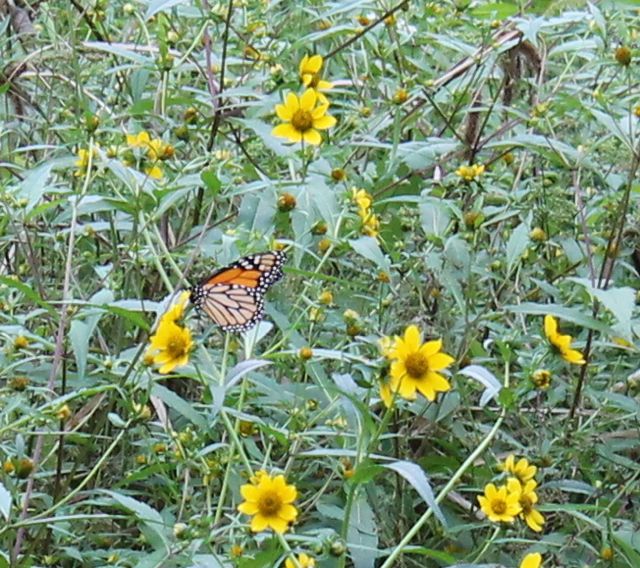
I've been having a heck of a time trying to photograph them. The big thing is figuring out the Viceroy vs. Monarch. Can you spot the differences?
Luck plays into it: preparation meeting opportunity. Part of it, too, is anticipating what they will do and where they will fly.
Journey North is tracking the fall migration of Monarchs. The Viceroys, apparently, aren't as important being officials only!


The difference is a stripe across the lower wing. CLick here for BAMONA's images.
One needs to work with good info to make reports on 'Journey North.' There is also, BugGuide.net to help us amateurs ID our little friends!