This was a difficult book to read. I imagine it was a difficult book to write.
Wabanakwut Kinew is an amazing Anishinaabe man, a musician, journalist, a chief, and now an MLA in Manitoba, and leader of the opposition. His late father was a North Western Ontario chief.
Kinew writes about his father's horrific time in residential schools. With Truth and Reconciliation, I believe we have to read about these stories. We must face the truth. He is a good writer, and his memoire unfolds beautifully.
He also writes of his own reconciliation with his father, after they came to terms with life. He and his father, and his family, have been to Sundance Festivals and he writes of these experiences. The most interesting part of his life was working on an app to translate verbs. A project he and his father shared to support linguistic revitalization.
Northern Ontario elk
Kinew attended a family graduation ceremony at Harvard, about which he wrote:
"...it was apparent that things were getting better. A generation ago, education had been the tool of oppression used to hold us down. Now it was the tool of empowerment, and we were using it to lift ourselves up."
Kinew writes of a fast and vision quest that takes place in Agawa, at Lake Superior Provincial Park. We visited there.
He writes of Mishi Pizhiw, and it is a fascinating legend from a deep and rich culture. It is an amazing journey of a brilliant young man.
Mishi Pizhiw
A moving story of father-son reconciliation told by a charismatic aboriginal star. When his father was given a diagnosis of terminal cancer, Winnipeg broadcaster and musician Wab Kinew decided to spend a year reconnecting with the accomplished but distant aboriginal man who’d raised him. His father was a chief in NW Ontario. Wabanakwut Kinew MLA, better known as Wab Kinew, is the Leader of the Manitoba New Democratic Party and Leader of the Opposition in the Legislative Assembly of Manitoba.Wikipedia
Click icon for more
book review blogs
@Barrie Summy
For more information...
Then, there is Jeremy Dutcher...but that may be a whole other chapter.
Dutcher, another Indigenous man, managed to get his hands on his Maliseet ancestors' vocal recordings. His album is amazing.
The album art is based on an old photograph.
The image is based on an archival 1916 photo, in which Blackfoot chief Ninna-Stako sits, speaking into the trumpet-like recorder, with ethnographer Frances Densmore.
As I searched for more information on Wab Kinew, I recalled this performance by Dutcher.
Jeremy Dutcher is a classically trained operatic tenor, composer, activist, and musicologist who takes every opportunity to blend his Wolastoq First Nation roots into the music he creates, blending distinct musical aesthetics that shape-shift between classical, traditional, and pop to form something entirely new.
The significance of land:
"It is in land that culture, economics,
and identity coalesce into a complex whole."
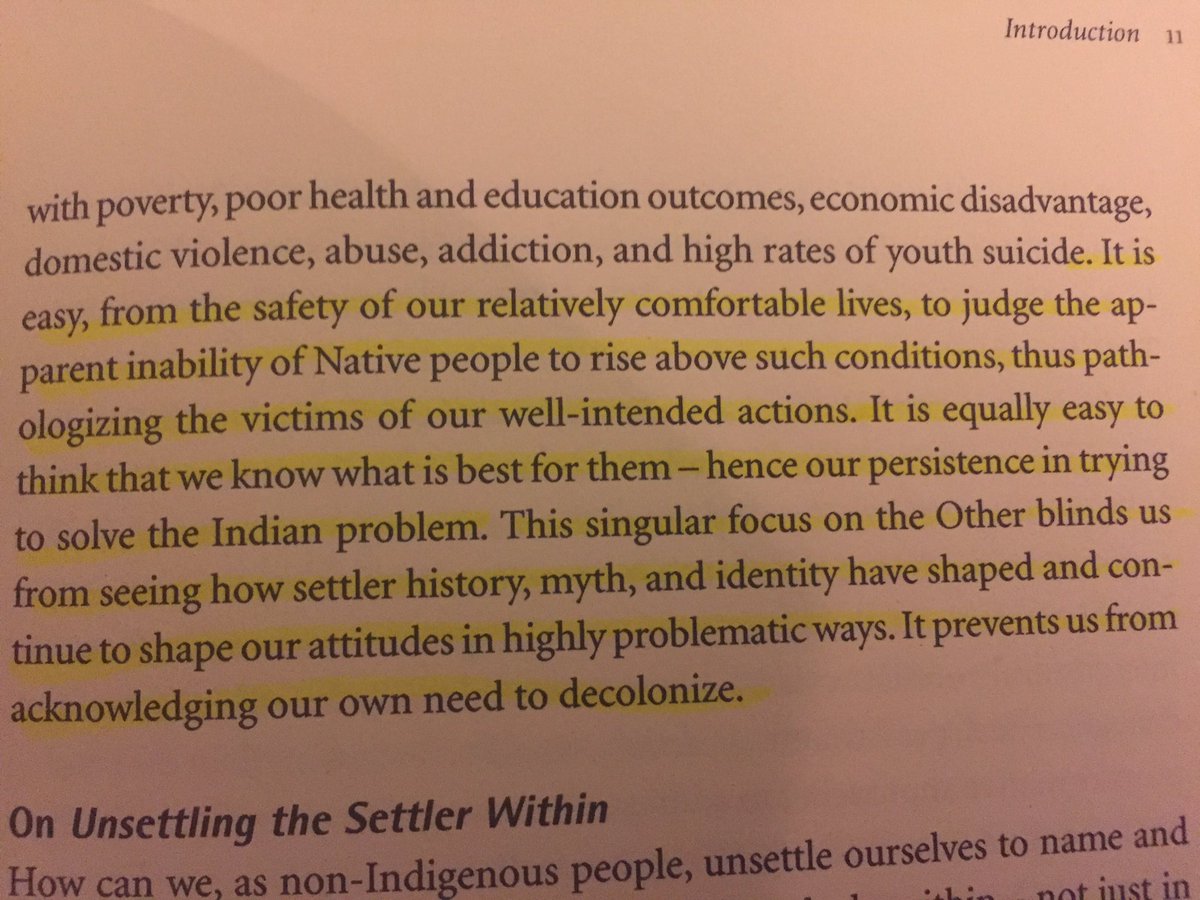
Talking Back to the Indian Act: Critical Readings in Settler Colonial Histories
It's a bit of a frustrating read, but an important one. I have prided myself on tackling contentious issues, a difficult read or not, I want to learn more. In the spirit of Truth and Reconciliation, I have endeavoured to read up on the past. My only criticism is the small font chosen for the paperback.
I understand that the target audience is a younger, university-aged crowd. I am thinking, however, that it would work for those Truth and Reconciliation Committees, which exists in many communities. Here in Lanark County it is called: Lanark County Neighbours for Truth & Reconciliation. People engage in education, ceremony, understanding, and learning about the past, and relationships between Indigenous and White Settler communities.
It is important, following the Truth and Reconciliation Act, to bear witness to the misogyny, the gender bias, and the stereotypical attitudes of those who wrote the Indian Act, and created abusive Residential Schools. First Nations have spent much time, energy, and willpower, fighting back peacefully, and in the courts.
The Indian Act (1876) is a disturbing means by which the Britain Crown rounded up First Nations, treated them like children, and banished them to reserves, where they were treated, at best, as wards or children of the state, or slaves, to endure violence, indignities, and abuse. This text provides specific letters and documents which demonstrate this attitude. Eventually, we understand, the Crown went from recognizing First Nations as an equal nation, to trying to eradicate and eliminate Indigenous Peoples.
The book is an excellent tool for a professor, charged with facilitating student learning, critical thinking and reflection. Certainly, an aforementioned committee, or a book club could use this as a reference. It contains the text of salient acts and letters, maps, footnotes within each chapter, lists of questions to stimulate thinking, a chronological list of Indian Act timelines, and an index. I think I would have appreciated a list of acronyms, as well.
Some salient points
5 C's of Historical Thinking
Five concepts that are the foundation of historical thinking: change over time, context, causality, contingency, and complexity.
4 Rs of Indigenous Methodologies
Touchstones of Indigenous methodologies–relationship, responsibility, respect, and reciprocity.
My conclusion, and that of many scholars, is that the Indian Act of 1876 was meant to remove Indigenous status of First Nation citizens, in which community can be preserved, to steadfastly eradicating all culture, traditions and values. The British government, and its white, male representatives, moved from an attitude of respect and protecting Indigenous Peoples from white settlers, to attempting to integrate them into white society, to using every means possible to reduce First Nations culture and society to rubble.
Speech made by Chief Deskaheh, March 10th, 1925
As Ottawa purportedly attempted an Indian Advancement strategy, and Washington managed to assimilate his people, the Chief made a powerful speech, in which he says rather than these, it is tyranny. Indeed, he stated,
"We are tired of calling on the governments of pale-faced peoples in America and Europe. We have tried that and found it was no use. They deal only in fine words...We want justice from now on. After all that has happened to us, that is not much for us to ask. You got half of your territory here by warfare upon red-men, usually unprovoked, and you got about a quarter of it by bribing their chiefs, and not over a quarter of it did you get openly and fairly." (p. 74-79)
APTN News He worked with Amnesty International to examine the OPP actions. ... Hay is a former RCMP officer and former chief of the Tyendinaga Mohawk Police. ... They were taken on April 25, 2008 showing OPP officers with assault rifles ... other documents, that the OPP viewed the Mohawks as violent criminals...
I have been reading an excellent book, written by a fellow colonial settler (as we settlers are called), who served on our Canadian Truth and Reconciliation Commission. I had no choice in how Canada began, but Canada does have a choice in how it moves forward. So say many Canadians.
"Asking me to celebrate Canada 150 asking me to deny 14,000 years of indigenous history on this continent." said one First Nation woman.
Canada, and our 'founding fathers' negotiated treaties which they have failed to uphold.
This is part of the Truth and Reconciliation that all of us, across North America must face. In the US, it is more focused on black slavery than First Nations, but the result is the same.
It was in 2008 that the Canadian government apologized to First Nations. According to a survey (.doc), it was revealed:
32% of Canadians feel unfamiliar, and 17% admitted they were unaware of Aboriginal issues,
37% knew that students were abused and molested,
20% knew about the 60s scoop (taken from their families),
10% knew Aboriginal children were not permitted to speak their native languages,
9% knew about the settlement agreements, 3% knew lawsuits were filed,
7% knew Indigenous Residential Schools were about assimilation,
4% knew schools were run by governments and religious institutions.
Racism endures in North America
Few of us know about Africville, a black settlement in Halifax, N.S., demolished in the 60s.
In the US, the Dakota people, at the end of the US–Dakota War of 1862, were relocated from their homelands. This is the root of the Dakota Pipeline issue, as well.
Dakota pipeline, all about money and profits
Truth is the difference between Knowledge and Acknowledgement.
“Each of the adults had suffered in an institution that tried to scrape the Indian out of their insides, and they came back to the bush raw, sore and aching,”
– wrote Richard Wagamese, a writer and poet, who inherited their trauma.
There is no question that Indigenous Peoples have many reasons NOT to celebrate Canada's 150th. This is when colonial settlers took over their lands, fooled them into signing treaties, lied and cheated them out of their rightful lands. They poisoned them with infected blankets, masquerading as gifts.
Here is a picture of Heavy Head. Last to be a true Sundancer at our Sundance, and was jailed for it when our Ceremony was illegal #Canada150pic.twitter.com/A4G3sVlLKT
On their reserves there are homes in which people should not live, water they cannot drink.
Jails are overpopulated with disproportionate numbers of Indigenous People.
Canada's MMIW is a terrible demonstration of racism, and the lack of money put into RCMP protecting Indigenous women, for example.
Roberta Jamieson "There is a growing awareness at a glacial pace. History is tragic, there are gems that have to be brought forward, such as treaties. Gesture politics."
Many deceived Indigenous leaders. Others took many, many years, and exploited First Nations. They stalled land claims in the courts, costing all of us millions and millions of dollars.
The Dakota pipeline protests caught my interest. Canada has a history of horrific tales of settler colonisation, and the theft of the land. The USA has a similar story of broken treaties.
This history is important to understand.
Out of interest, after I have been researching the history of the colonization of Canada. As a white person, I think it is the only response to The Truth and Reconciliation Commission. There are those who believe there is no possibility that settler colonisers can be reconciled. I'm inclined to disagree.
When you know better, you do better, if it isn't too late.
In the spirit of reconciliation, we must listen to their stories.
Many kids died in these schools, estimates of 50 - 60%. Kids ran away, only to get lost in the bush. We can make fun of the way the USA has treated First Nations with the #NoDAPL, but what Canadian civil servants and church employees and high-ranking church leaders have done.
I was researching the residential schools, I found the first report (1907), by the head medical officer for Indian Affairs, who spoke truth to power. He was fired.
The church and provinces expropriated treaty lands from Crown land, and then dragged kids away from home to place them into residential schools to make them more white.
Residential Schools were underfunded:
(We Can't Make the Same Mistake Twice). Taxpayers didn't want to pay for the schools. This was a photo taken to support increased funding by the Canadian Government. They celebrated turning Indigenous boys and girls into something they were not. The schools were underfunded, and were often filled with staff who were racist, if not sexually abusive.
Fig. 1: Department of Indian Affairs. Thomas Moore before Tuition at Regina Indian Industrial School. 1897. Saskatchewan Archives Board. In A National Crime. Fig. 2: Department of Indian Affairs. Thomas Moore after Tuition at Regina Indian Industrial School. 1897. Saskatchewan Archives Board. In A National Crime.
This award winning documentary reveals Canada's darkest secret - the deliberate extermination of indigenous (Native American) peoples and the theft of their land under the guise of religion. This never before told history as seen through the eyes of this former minister (Kevin Annett) who blew the whistle on his own church, after he learned of thousands of murders in its Indian Residential Schools.
He was appointed to the United Church in Port Alberni. After exploring the common threads of murder, abuse and residential schools, he spoke truth to power. I had no idea. I've heard the horrific abuses, and listened. I didn't know what had been perpetuated by The United Church of Canada, in a ploy for land, money and power.
Annett was attacked, after being warned to be quiet, had his PhD. blocked, and United Church staff blocked his subsequent employment in B.C. He was shunned by church staff and clergy. He brought the skeletons out of the closet.
Jan. 23, 1995 Annett had served as a minister for 3 years, and was fired without cause. The church paid for his divorce, and limited his access to his children. Without the knowledge and consent of his church members, and with the collusion of those in Toronto head office, as well as the RCMP.
Annett listened to their stories, and did more research. England deliberately gave people tuberculosis, by giving them blankets from those in hospital with TB. Then, it was small pox. The average death rate in residential schools was 50%. Murder, sexual abuse, medical experiments, hundreds were sterilised, unable to have children.
The United Church of Canada deliberately destroyed Annett, paid for his wife to divorce him and held a trial to de-list him for simply speaking truth to power. The 'Pales', as Annett calls us, didn't want to hear the horrific stories people told in Port Alberni.
The film: "We Can’t Make the Same Mistake Twice" exposes Canada's barriers to reconciliation https://t.co/eLddUPT8U3
20 minute history of Canada and the Indian Residential School system. To provide historical context and intended as a prequel to the video Murray Sinclair Truth and Reconciliation. Developed for School District 27 Grade 5/10 History curriculum.
KUPER ISLAND
Published on 1 Nov 2013
Return to the Healing Circle.
Residential School Survivors.
It was the Kuper Island Residential School, and it stood on a remote island off the coast of British Columbia. They called it Alcatraz.
For almost a century, hundreds of Coast Salish children were sent to Kuper Island, where they were forbidden from speaking their native language, forced to deny their cultural heritage, and often faced physical and sexual abuse. Some died trying to escape on logs across the water. Many more died later, trying to escape their memories.
Métis filmmaker Christine Welsh and Peter C. Campbell join survivors of the school, 20 years after its closure, as they begin to break the silence and embark on an extraordinary healing journey.
Much harm has been done by the churches, both Catholic and Protestants, i.e., Wahta Mohawks in Quebec.
The Wahta community was founded when a group of the Mohawk people moved from Kanesatake, Quebec to Gibson Township (Muskoka) in 1881. The conflict over land and religion were what brought about the move. The Catholic missionaries (of the Seminary of St. Sulpice, frequently termed the Sulpicians), Mohawks and other Iroquoians, Algonquins and Nipissings had occupied land at Oka, Quebec since early 1700, after a grant was made by the French Crown.
Sadly, this young man, Colton Boushie, was murdered in Saskatchewan. He wrote of the impact of residential schools on Indigenous Peoples. Education is so important.


"...it was apparent that things were getting better. A generation ago, education had been the tool of oppression used to hold us down. Now it was the tool of empowerment, and we were using it to lift ourselves up."