Showing posts with label invasive species. Show all posts

Monday, 28 March 2022

The Battle of the Burrs

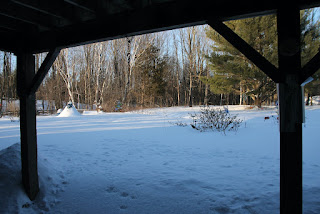
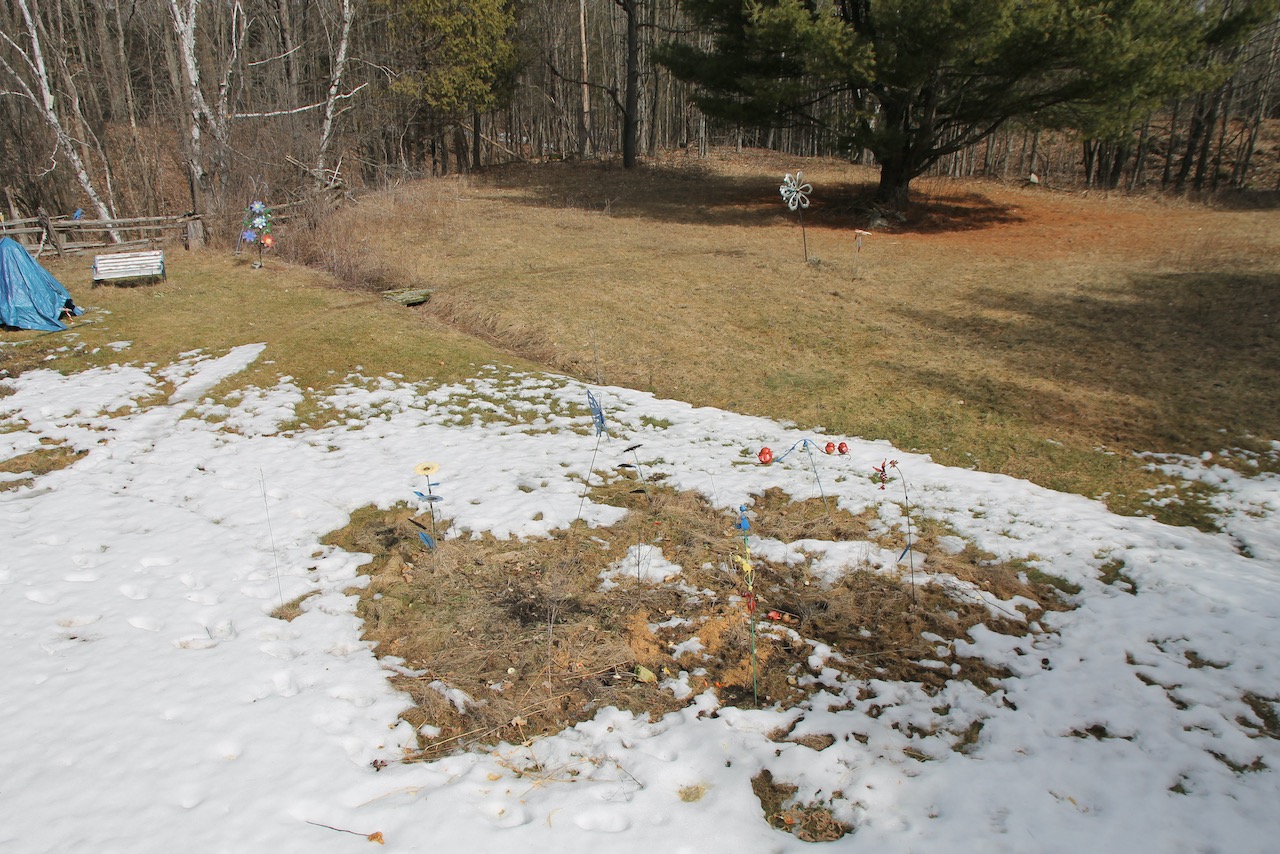
 Yes, burrs. I removed two thistle plants leftover from last year, and two burdock plants from the back lawn. I should have done it before the snow melted around them. The thistle is in the near middle of the photo to the left of the water fountain, which is still wrapped for winter. I did remove the Christmas lights from it last week. It was time!

Burrs are an effective means by which plants are dispersed. There are two types of dispersal: endozoochory and epizoochory. The first is when animals swallow fruit and seeds, and secrete the seeds out the other end. The last type is what the burdock burrs do: they use little hooks and barbs to stick to the outside of the critters, and the animals transport them on their coats.

The burrs stick to everyone!

You can see the burdock plant skeleton in the lawn. This was when we had more snow. 


My scarf is a bit of a mess.My coat looks pretty bad, too! I am waiting for some sunshine to sit on the front deck and remove them. 

It is an invasive species, sadly. 

"Arctium is a genus of biennial plants commonly known as burdock, family Asteraceae. Native to Europe and Asia, several species have been widely introduced worldwide." Wikipedia
Bur Macro.jpg
By Prosthetic Head - Own work, 
CC BY-SA 4.0Link

This is where the daffodils will come up! This is from April 21st, last year. We had some late snow, but the daffies survived. 


Unfortunately, aside from the burrs that stuck to me, there are a ton of burrs on the ground. This is where I intend to plant my veggies.

Not too long until I remove the tarp and get the water fountain going.


🍃seeds grow

In the bathroom I've got some coleus, strawflowers, pansies, and lupin. 


coleus

The zinnia I removed as they were becoming too long and falling over. I'm out of practice with this, but it did me good to plant them!


Sunday, 28 June 2015

Dutch Elm Disease in Ontario

Elm Recovery Brochure
On a drive to Brockville, I began noticing a lot of dead elms. Now, I know that Dutch Elm Disease (DED) has stricken a lot of our elms in Ontario, and across Canada and the US. A lot of farmers are recently chopping them, and piling the wood. It got me curious.

DED has spread, beginning in 1940s in Ontario, with the local Elm Bark Beetles. They dig under the trees, contact the fungus, and spread the fungal spores. The spores block the ability of the trees to take up water.

I started wondering about the elms around us. What was the timing of them dying? It appeared that a lot were being cut down at the same time. Ours are propagating, producing copious seeds in spring, and dying, all over the property. We've had some very big ones taken down recently. The branches fall, frail as they dry out they bend, and in a big wind could be dangerous.

The University of Guelph has been doing a lot of work on elm disease. They began with taking cuttings of the strong trees that have survived this vascular disease. The work of the late Henry Kock (1952 – 2005) at The Arboretum at uGuelph has been amazing. He was the one who noticed some large elms still surviving, and began to undertake research.
We now know that the DED attacks every elm, but many trees have a strong enough immune system to live for 20 to 30 years, reaching about 20 to 40 cm diameter. Some may live 60 to 90 years and attain the classic elm silhouette. Scattered across Ontario, unusually large, surviving elms are as big as 500 cm or 15 feet in circumference. So isolated are they that little opportunity exists for DED tolerant trees to cross pollinate and produce the next generation.
Funnily enough, they found that there were many of these larger, virus-resistant trees scattered across the province.
Our database of reported elms now contains over 1800 records and we have visited over 600 of the most promising specimens which can be found throughout Ontario, from Windsor to Sault Ste. Marie and over to Ottawa.  

Lots of seeds everywhere
We have a ton of elm trees, with many surviving, and many more dying.

I found some information on the obtuse government of Ontario site. It was just plain wrong. Our Ontario.ca website (which is horrible to navigate!) mistakenly says that the trees die within 1 - 3 years, but that is false.

OFAH/OMNR Invading Species Awareness Program. (2012). Dutch Elm Disease (This fact sheet may be reproduced for non-commercial purposes.)
How to Identify Symptoms of Dutch Elm Disease
  • Symptoms can first be seen in June and early July.
  • Leaves wilt and curl, turning yellow and brown in the summer.
  • Branches begin to dieback and then result in death.
  • Brown staining can be seen on the side of the tree when bark is peeled back.
What You Can Do
  • Learn how to properly identify the signs and symptoms of dutch elm disease.
  • Never transport elm wood or wood products with bark to new areas.
  • Buy firewood locally when travelling or camping. Never bring unused wood home with you.
  • If planting elm trees, buy from a local and reliable source.

I have many wee trees in my gardens!


You can see large and small dead elms in our forest.


It's so sad seeing them. Many have had wild grape vines taking over the tree, which provides food for animals, at least.

Tuesday, 29 July 2014

Wild parsnip abounds in Ontario ditches - it's poisonous

Contact dermatitis
Poison Ivy rash in October, 2011.
Another long story!
There are lots of weeds that are toxic to us, most give us Contact dermatitis.

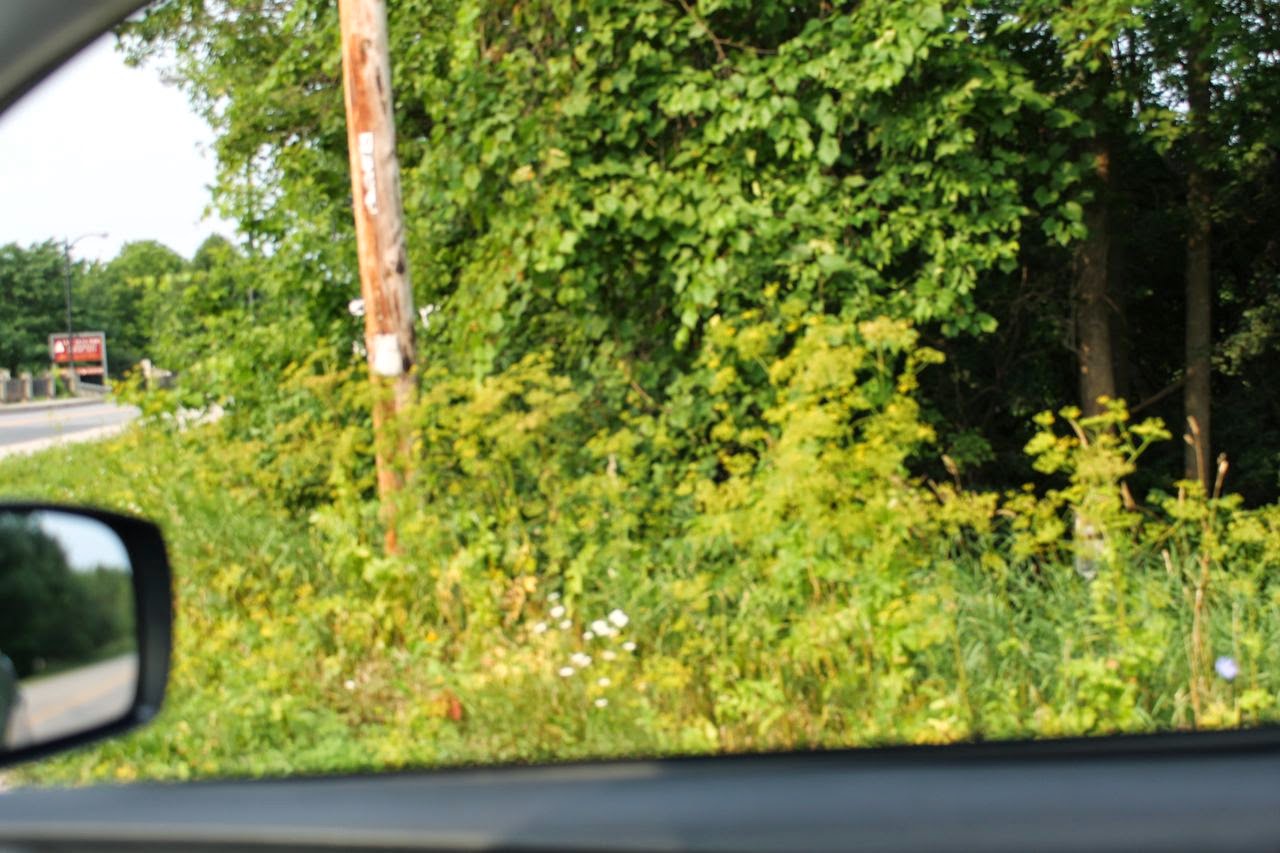
The Wild parsnip worries me, as it is ubiquitous in Southeastern Ontario ditches.  The government has a website for weeds. I drove home from my daughter's house, and stopped to photograph them.

I'd noticed them after cleaning them out from around my mailbox.
I've had some boils, so I know I've been infected with the poison, either from this, or from our Poison Ivy patch down by the meadow. I made the mistake of going over the ivy with the law tractor.


Contact dermatitis begins with an itch or boils. If not treated, and spreads throughout your system. Usually, with the first contact, you'll spot a little boil or two, about the size of a pencil dot on paper. It percolates throughout your body. Mine, on my arm, spread to my stomach.

First bout in the summer: July, 2011.
These boils are terribly itchy.
OCT. 2011:
The open boils spread
onto other areas if unchecked.
I found two boils on my ankle a few days ago, again. This was my second contact.

Each time I am in contact with another poisonous plant, the attack is worse. These poisonous plants give us Contact dermatitis. If not checked, it can be horrible, as I can attest. The ER doctors failed to diagnose it, while the Triage Nurse suggested that was what it looked like. I learned my lesson and apply the cream at the first sign of it.

I found Wild Parsnip in my garden, likely transported by birds. It is an invasive species. It is moving from South and Eastern Ontario, across the continent to the west.

Wild Parsnip
Pastinaca sativa

Wild parsnip is an invasive plant native to Europe and Asia. It was likely brought to North America by European settlers, who grew it for its edible root. Since its introduction, wild parsnip has escaped from cultivated gardens and spread across the continent.

This is what they look like:
First year plant

The government website is very clear about which chemicals may or may not be used these days. I used spray-on bottles, designated to kill poison ivy. They work, after a few days being absorbed, on the Wild Parsnip. You can spot the Wild Parsnip with the pretty, yellow flowers appearing in an umbel. It looks like Cow parsnip, which is harmless, and has the same umbels. In fact, the plants look much like dill weed, with the same system of umbels!

Almost looks like dill weed!

You can tell the difference as the dill weed has skinny little leaves, and smaller flowers in an umbel, much like cow parsnip, Queen Anne's Lace.


Other Resources

Here are the incredible numbers of plants in ditches.

I went in and told the family this was poisonous
-see it to the right of and below the blue?
They knew and had been trying to get rid of it.


Stay away from it. It is terrible stuff.

This is white, Water Parsnip,
found in our dried up frog pond.
It is a marsh plant.
This plant I sprayed with
Poison Ivy killer spray.
Thankfully, it died.
They look innocuous.