Showing posts with label habitat. Show all posts

Sunday, 12 June 2016

Guess who had six babies!

Adult feeding
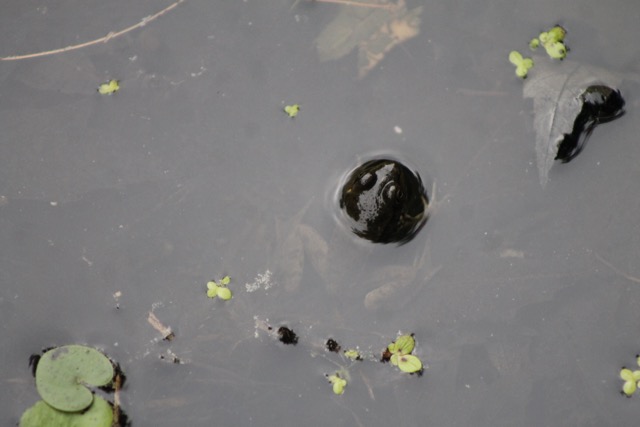
Well, I hope my faithful readers appreciate this. I have a mosquito bite on my right hand and my right foot. It WAS worth it! In our frog pond, I spotted 6, SIX muskrat kitts! They are adorable!

They are born blind and naked, but their eyes are open, and they have fur and can swim by two weeks of age. They are weaned in four weeks. They become adult size after 3.5 months. Although the adult male remains as an occupant of the den in which the young are born and raised, it does not participate in their care.

The B.C. government paper says that mortality rates, according to North American studies, fall in the range of 30 -  65%, as they are prey for minks, foxes, coyotes, hawks and owls.
I've seen all of these critters in our forest!

They are basically a large rodent, a field mouse that has adapted to living in a pond.
Hinterland's Who's Who says that they can have another litter or two this summer, and they are promiscuous. They used to be hunted frequently for their fur, but humans have not wiped them out as their population is as high as it was a thousand years ago. I've seen them as roadkill, as they seek out vegetation, or new homes.

They use their glands to mark their territory, primarily in mating season, when they mark around their lodges. They have a poor sense of hearing, sight and smell. I can stand there on the dock and watch them. If I move, they duck for cover.


You can see the lodge they built on the far side of the pond.

We had quite the drought in May, and the pond is very shallow.   It's too shallow for winter, as it freezes, and I imagine they will move on. If you have the patience to watch to the end, you can hear the grey tree frogs calling and see the turtle raft I put into the pond.
muskrats from Jennifer Jilks on Vimeo.

The wood frog tadpoles are now breathing air and are losing their tails. Muskrats are primarily herbivores, but will eat snails, and other water critters should they need to. There is a ton of frogbit growing in the pond, an invasive species, but the muskrats love it.
Sunday, 26 May 2013

Catalpa trees are amazing!

I decided to put all my Northern Catalpa
tree photos together. They are a beautiful Ontario tree.

Large, showy white, trumpet-shaped flowers grace the Catalpa in late spring. Its narrow crown is oval-shaped or uneven, upright with distinctively large, heart-shaped, bright green leaves and long, bean-like pods. Withstands wet, dry, alkaline soils and hot, dry environments, but prefers moist, deep soil. Sun or partial shade. Grows to 40'-60' with a 20'-40' spread. (Zones 4-8).


The birds love the tree, as it is beside our bird feeder!
This photo shows the frost damage on leaf buds from this month.

Daisy love the tree, and practices her bar routines on it!
Catalpa buds
This giant, old catalpa tree
is in Westport, Ontario

Flowers are beautiful!
There is some discussion about the tree in the NE U.S.A.(Catalpa speciosa).


INVADER OR RETURNING ALUMNI?
 Some say that outside of its native range, the northern catalpa is an invader. My home state of Connecticut has labeled the northern catalpa as having "demonstrated invasive tendencies", which is a no-no of the third degree."

Thing is, it can survive Montreal -30 C. temperatures, as well as being found in the north eastern US, to the south of us.
The flowers are a rich habitat for critters galore! Hummingbirds, bugs, bees, spiders!
Getting bugged!
Baby Buster (photo: June '11)
and Felix (Mar. 30, 2011 - Aug. 2010)

Buster loves this tree!

See it? Look closely! X marks the spot!


Leaves damaged by September hail storm They have huge leaves. The seed pods are amazing, too.

 Isn't it delightful?!
  In winter, the kittens had a blast in the other Catalpa tree!

Saturday, 29 December 2012

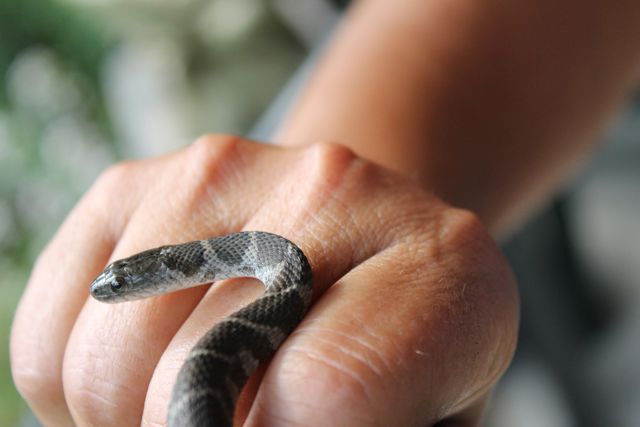
Men fined $53,000 for damaging snake habitat

Can you imagine?
A hermit thrush who lives on the edge of the wetland.
I spotted it last spring.
Mankind's true moral test, its fundamental test (which lies deeply buried from view), consists of its attitude towards those who are at its mercy: animals. And in this respect mankind has suffered a fundamental debacle, a debacle so fundamental that all others stem from it. 
-Milan Kundera, novelist, playwright, and poet (b.1929) 

I often read the Ontario MNR News Releases. It isn't amusing and it is shocking. People with no respect for a wetland, or the critters that inhabit it.


pond puppy
There are many who violate not only common sense laws of the land, but the specific details. Thing is, the latest report is of these people sentenced in Parry Sound, but they live in south west Ontario. That is a distance of more than 460km (285 m)!

This latest report is of a pair who apply for a work permit in 2010 in spring, to build a trail across Crown Land. They are denied the permit. The reason is that this land contains an endangered species, including the eastern fox snake. They are endangered because they are similar to rattle snakes, and people feel obliged to kill those. The thing is, there aren't just snakes, but many critters the snakes keep in check.

baby watersnake
They go ahead anyway, and on July 8th rent a backhoe and begin. The MNR issues a stop work order July 9th, which they violated. Back they were, July 12th they were reported and caught having done work all weekend. The fines are substantial. How dare they? An enormous lack of understanding of habitat, the importance of ecosystems, and the cycle and the balance of life.

 Paul VanErp, of Bothwell, Ontario, and Kyle VanDeven, of
rattlesnake
Kerwood, Ontario, were convicted and fined a total of $53,000 for offenses under the Endangered Species Act and the Public Lands Act.


From CottageCountry.ca
Justice of the Peace Diane Lafleur heard the case in the Ontario Court of Justice in Parry Sound on October 22, 2012.

The fines for VanErp:

  • $20,000 for damaging endangered species habitat
  • $8,000 for constructing a trail on Crown land without a permit
  • red snake
  • $5,000 for violating a stop work order. 
The fine for VanDeven:
  • $12,000 for damaging endangered species habitat
  • $4,000 for constructing a trail on Crown land
  • $4,000 for violating a stop work order. 

dock spider

Nature will bear the closest inspection. She invites us to lay our eye level with her smallest leaf and take an insect view of its plain. 
-Henry David Thoreau, naturalist and author (1817-1862)


garter snake
To report a natural resources violation call 1-877-TIPS-MNR (847-7667) toll-free any time or contacting your local ministry office during regular business hours. You can also call Crime Stoppers anonymously at 1-800-222-TIPS (8477).